
/
Rethinking Made in China: On view at Wereldmuseum Rotterdam
“Made in China” is one of the most familiar labels in the world. First intended as a mark of origin on global trade goods, it has since become shorthand for mass production and imitation. The exhibition at Wereldmuseum Rotterdam asks us to look again. Here, the phrase is reclaimed as a story of ingenuity, craft and cultural continuity. Also of how people make, and how making or creating in turn shapes us.
A culture of making, past and present
The exhibition opens with a timeline that underlines how many of the world’s major inventions first took shape in China. Paper, porcelain, gunpowder, silk weaving, the compass and printing were already in use centuries before their European counterparts. Objects and fragments on display highlight this deep history of invention: from early ceramics and lacquerware to delicate silk garments and tools. This foundation reminds us that “Made in China” once stood for refinement and creativity. The later rise of mass production and cheap exports is only one chapter in a much longer story.
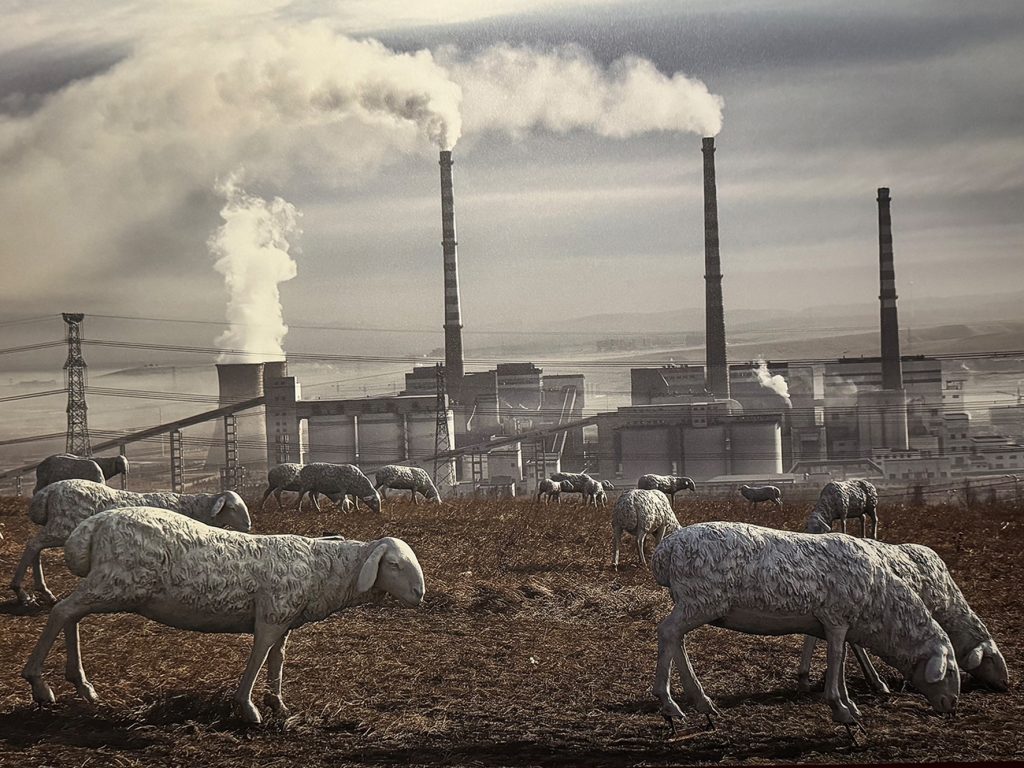
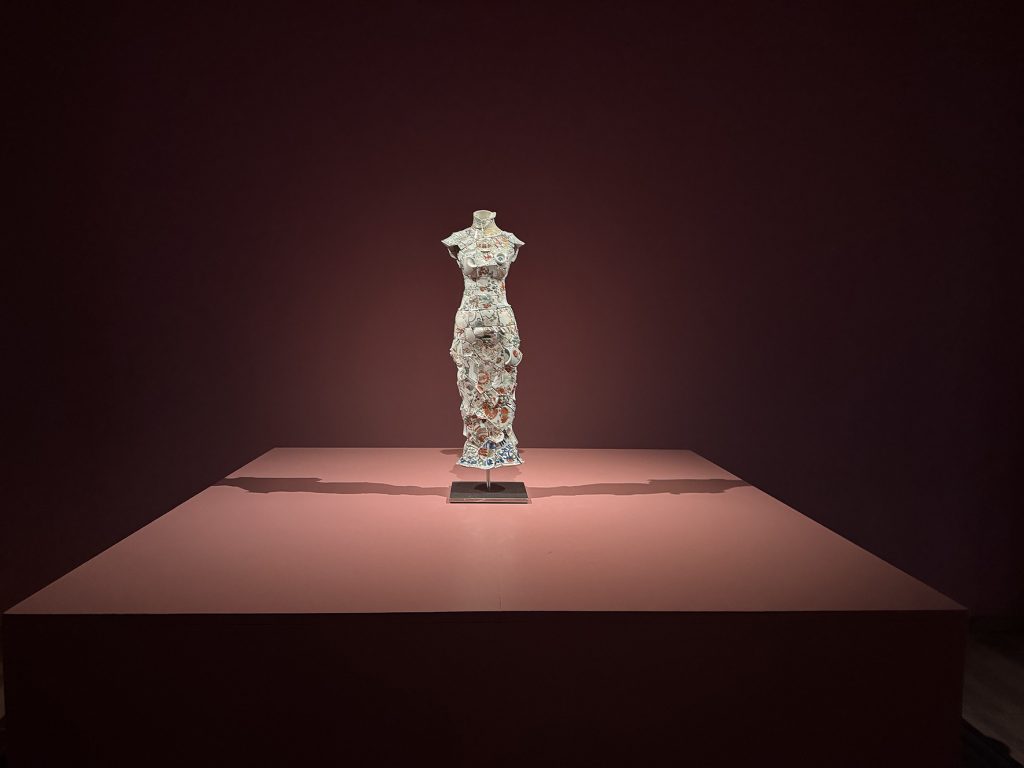
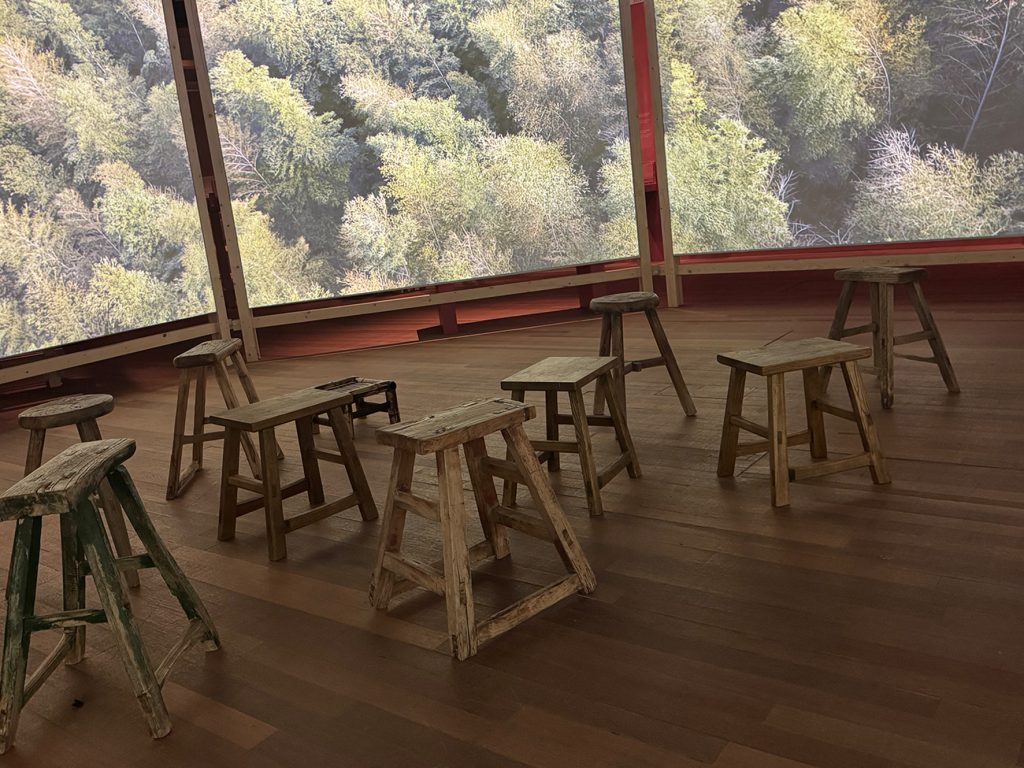
Sculptures placed by the local government on the grasslands as a visual replacement for real sheep. Inner Mongolia, photographed by Lu Guang, Past Presence 01, artwork by Li Xiaofeng, Entrance to the exhibition Made in China.
Copying and production rethought
Copying, often dismissed in the West as derivative, is reframed here as homage and knowledge transfer. For centuries, reproducing the work of masters was a way of preserving cultural memory. The exhibition shows how this perspective still resonates today. In the West, repetition and serial production have been celebrated as avant-garde. Think of Andy Warhol’s Factory in New York, where assistants, silkscreens and endless variations were central to his practice. What is praised as innovation in one context is often labelled mass production in another. Made in China invites us to consider where imitation ends and invention begins. At the same time, the exhibition does not avoid the darker side of making at scale. It documents the rapid rise of industrial production and its cost to people and the environment. Photographs and videos show contemporary factory life and pollution problems.
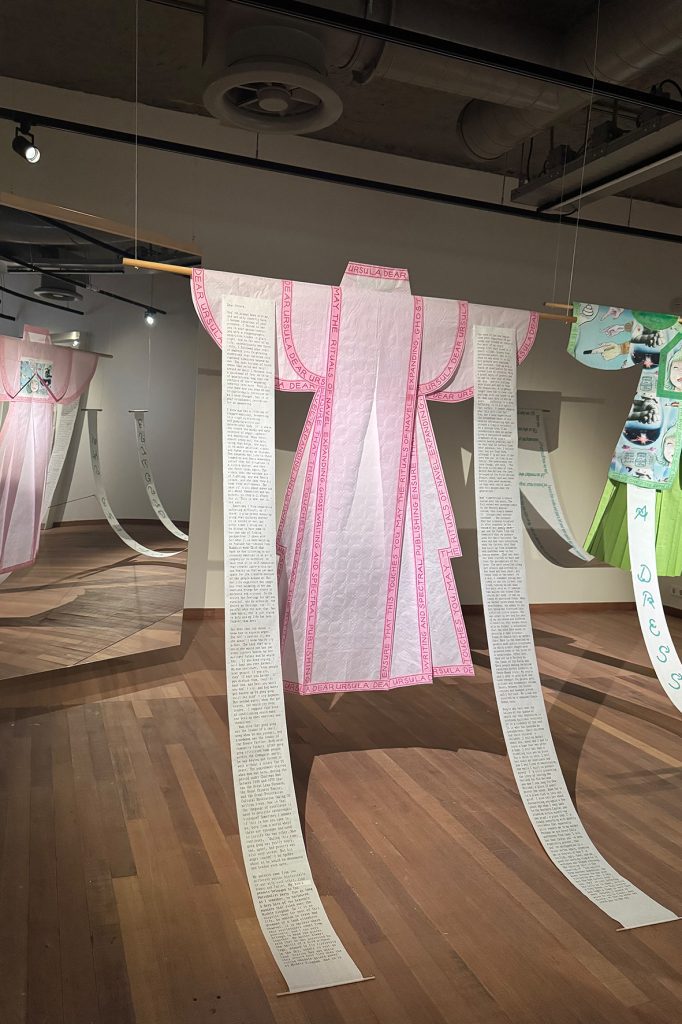
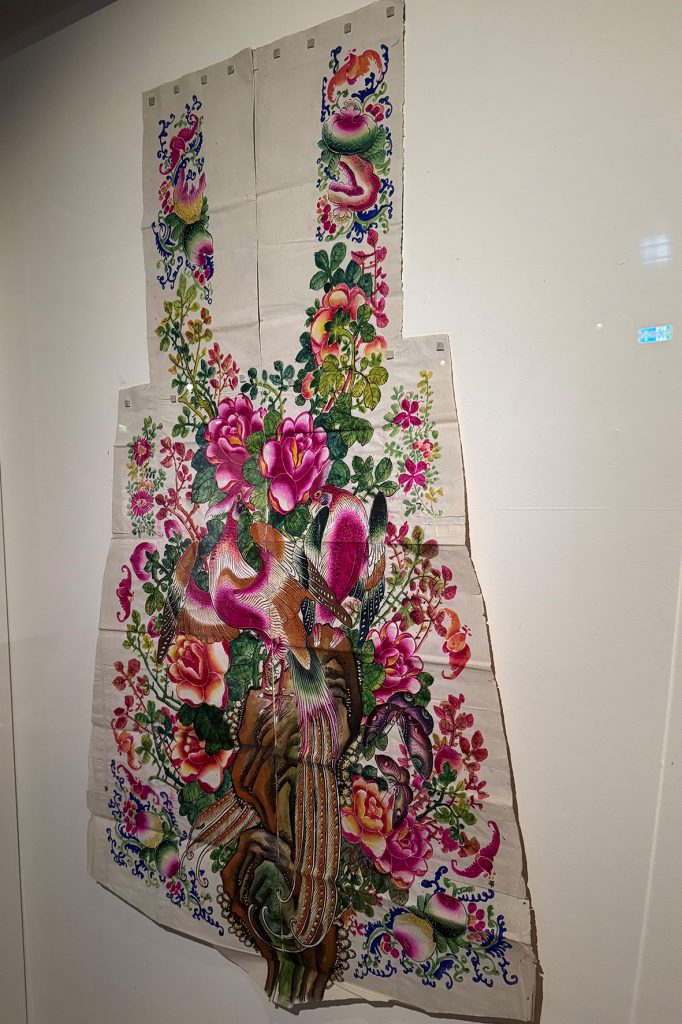
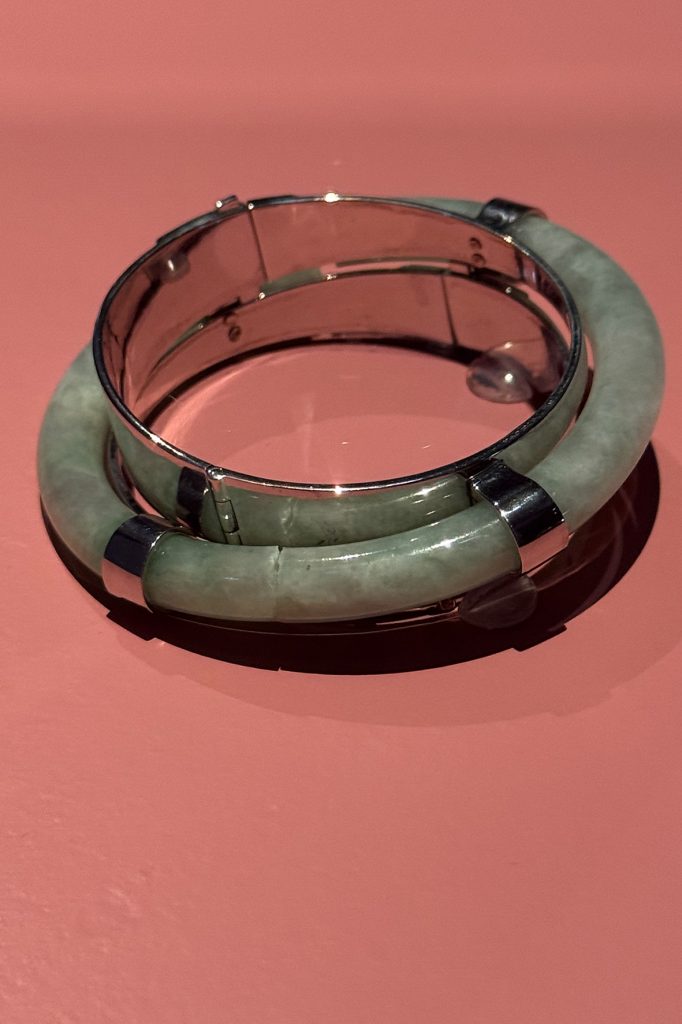
Dear Ursula, artwork by Amy Suo Wu, Joss Paper dress, 1930-1940, Shantou China, braclet design by Chan Po-Fung
Susan Fang: innovation as imagination
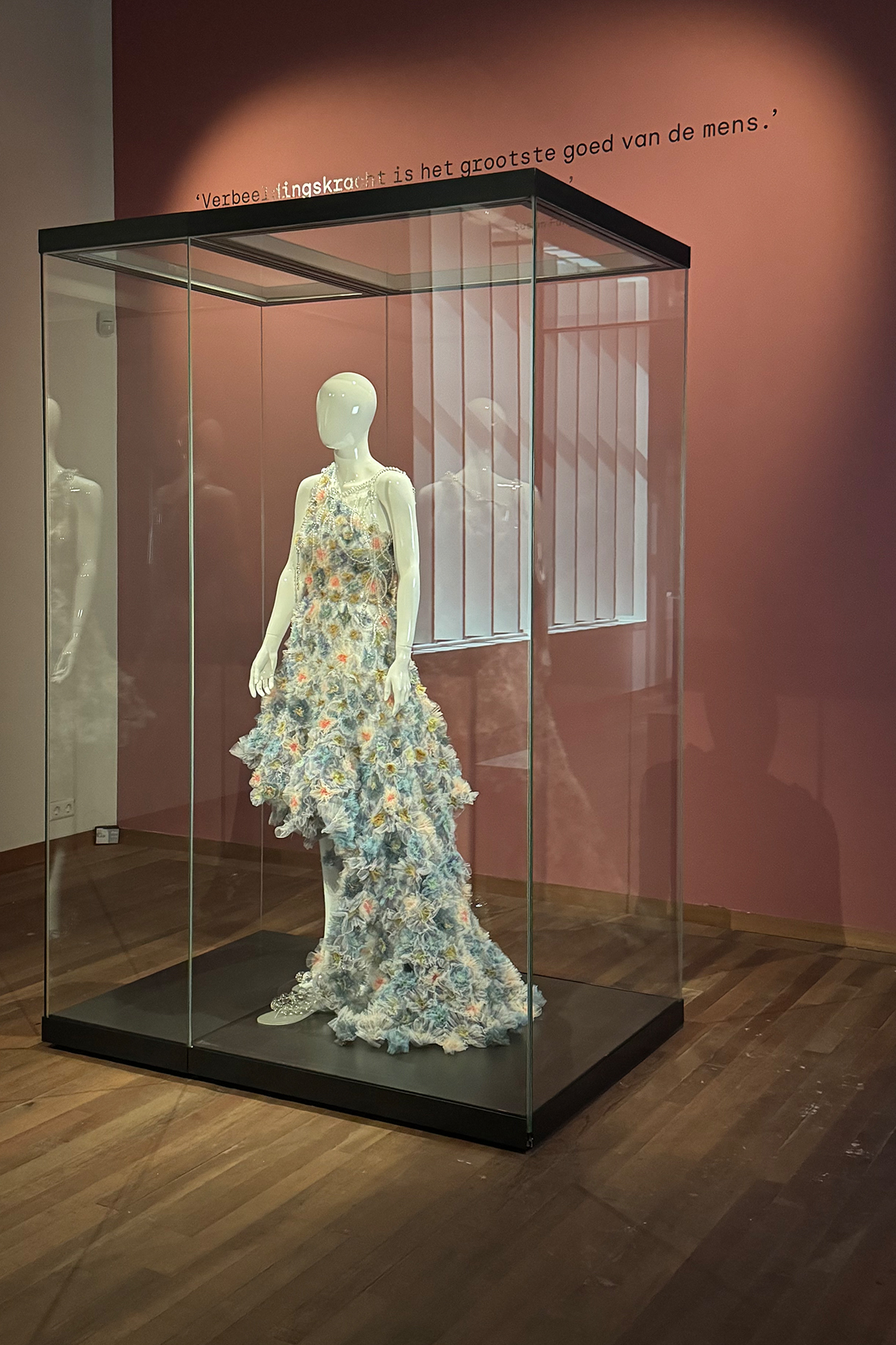
Among the contemporary voices, London-based designer Susan Fang stands out. Since launching her label in 2017 after graduating from Central Saint Martins, Fang has built a world of airy, romantic creations that creatively blend nature, perception and craft. Her signature air-weave method, layering fine fabric strips into three-dimensional lattices, gives garments a light, floating quality. Often crafted in collaboration with her mother and aunts in Shanghai, her collections also lean into sustainability, using repurposed textiles and artisanal techniques. Fang’s work reminds us that fashion can be equal parts technical innovation and emotional expression.
Chan Po-Fung: fractured beauty
One of my personal highlights is the work of Hong Kong-based artist Chan Po-Fung. He transforms broken jade bracelets into new jewellery. In traditional practice, jade worn as a talisman is often set aside once it breaks. Such pieces are often kept as treasures rather than worn again. Chan takes those fragments and rebuilds them into pieces where the fracture is central, enhanced with gold, silver or other materials. It recalls the Japanese philosophy of kintsugi, treasuring imperfections rather than hiding them. My mother’s jade bracelet once broke in two. She had it repaired with a golden lock and passed it to me. This jade is both fragile and enduring. I would love to visit his atelier in Hong Kong.
Amy Suo Wu: letters to my ancestors
Rotterdam-based artist Amy Suo Wu (China, 1985) created Dear Ursula (2021), a series of life-size garments made from joss paper, traditionally burned as offerings to ancestors. By shaping these ephemeral sheets into clothing, Wu reimagines ritual as something visible and lasting. She calls it “spectral publishing”: writing to her ancestors in material form. As I stood before Dear Ursula, I found the gesture deeply moving. In Hong Kong, ancestor rituals remain part of life. Families climb the mountains during Ching Ming or Chung Yeung, carrying food and burning paper offerings. Wu reimagines this practice not as smoke that vanishes, but as a garment grounding memories.
Revisited
Taken together, this exhibition reframes the meaning of the term “Made in China”. It is both a marker of global trade and a lens onto creativity, identity and resilience. The works on view show that ‘Made in China’ is not just fast production. It is a new interpretation of tradition, craft and belonging.
All images are taken by author, courtesy of the artists and Wereldmuseum Rotterdam
Discover: https://rotterdam.wereldmuseum.nl