
In Munich’s Kunstareal, the Alte Pinakothek stands as one of Europe’s most remarkable art museums. Designed in the 19th century by Leo von Klenze in the Neo-Renaissance style, the building was later reconstructed by Hans Döllgast, who left parts of the damaged brickwork visible as an architectural reminder of its history. Two grand staircases connect the museum’s levels and lead visitors towards one of the largest classical art collections in the world. It has the same sense of grandeur I know from the V&A in London and the Rijksmuseum in Amsterdam.
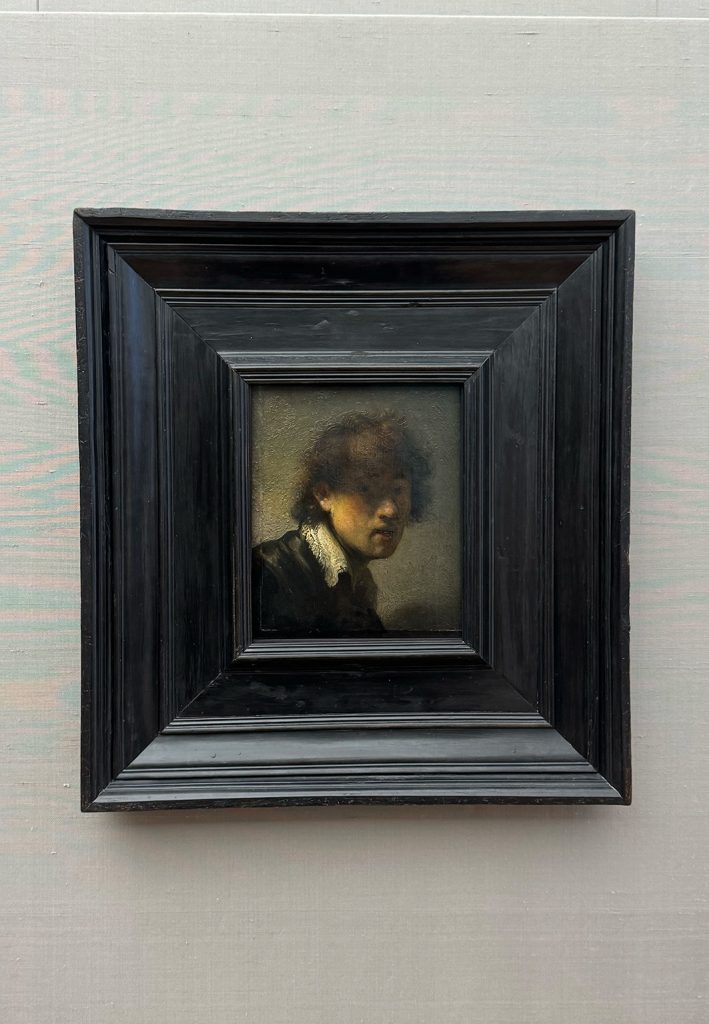
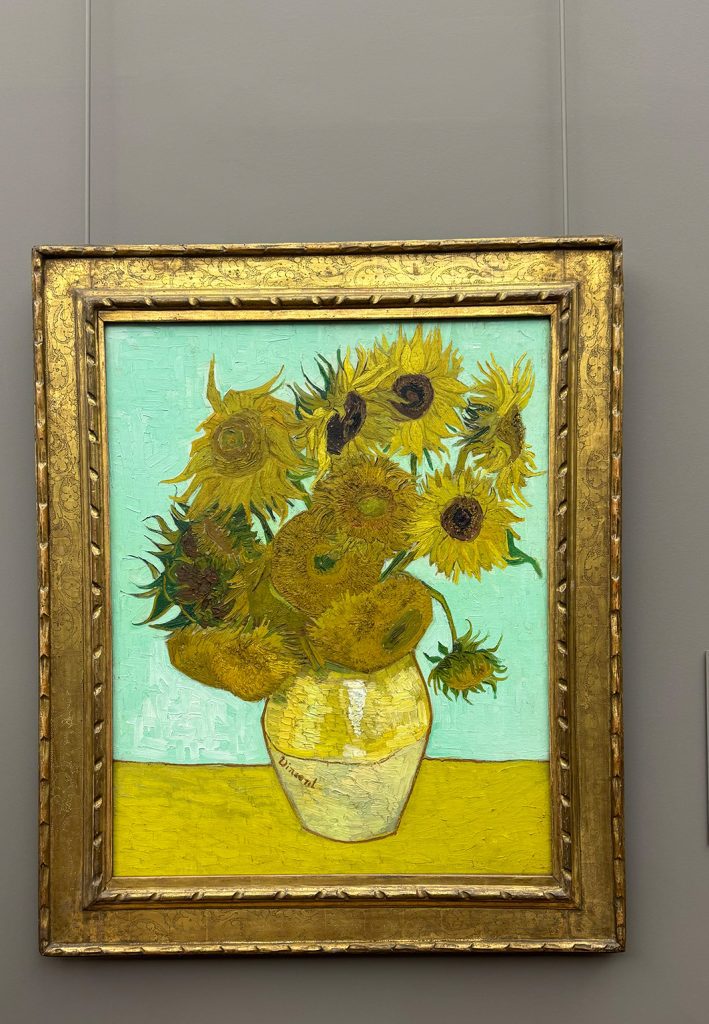
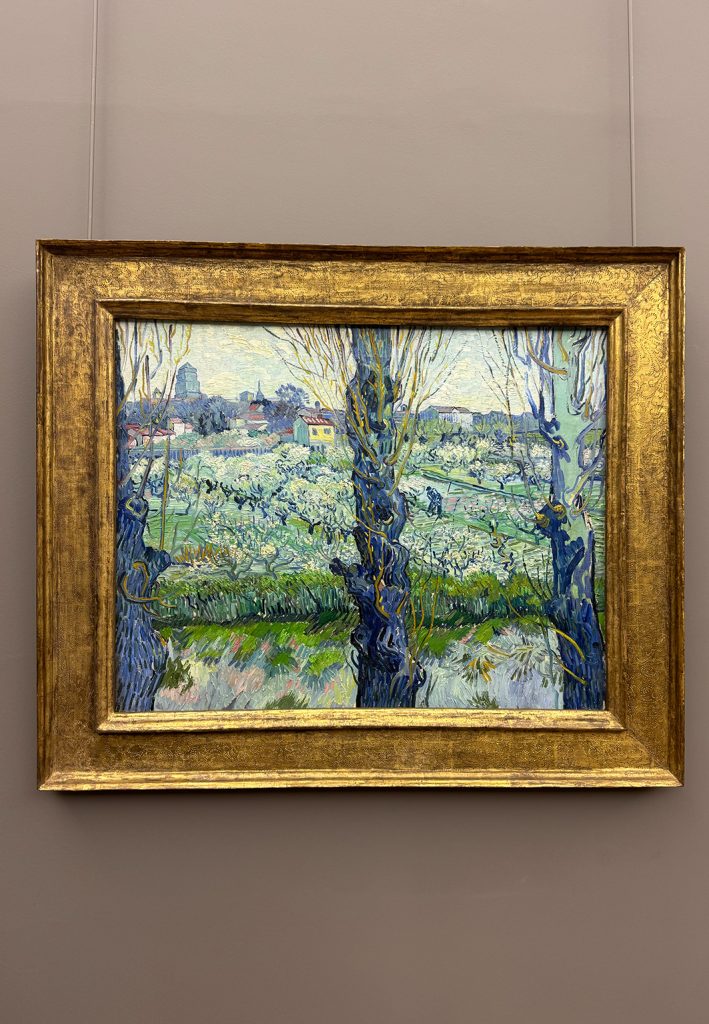
Rembrandt, Self Portrait (1629), Vincent van Gogh, Sunflowers (1888), Vincent van Gogh, View of Arles (1889)
Inside, the rooms feel carefully composed. Some have coloured walls that enhance the works, others are filled from top to bottom. Certain pieces are given room to breathe, while others compete beautifully for attention. Paintings by Tintoretto, Rembrandt, Van Gogh and Klimt hang beside many others that span centuries of style and expression. It feels familiar, like Amsterdam’s De Pijp, the neighbourhood where the streets are named after painters whose work now surrounds me.

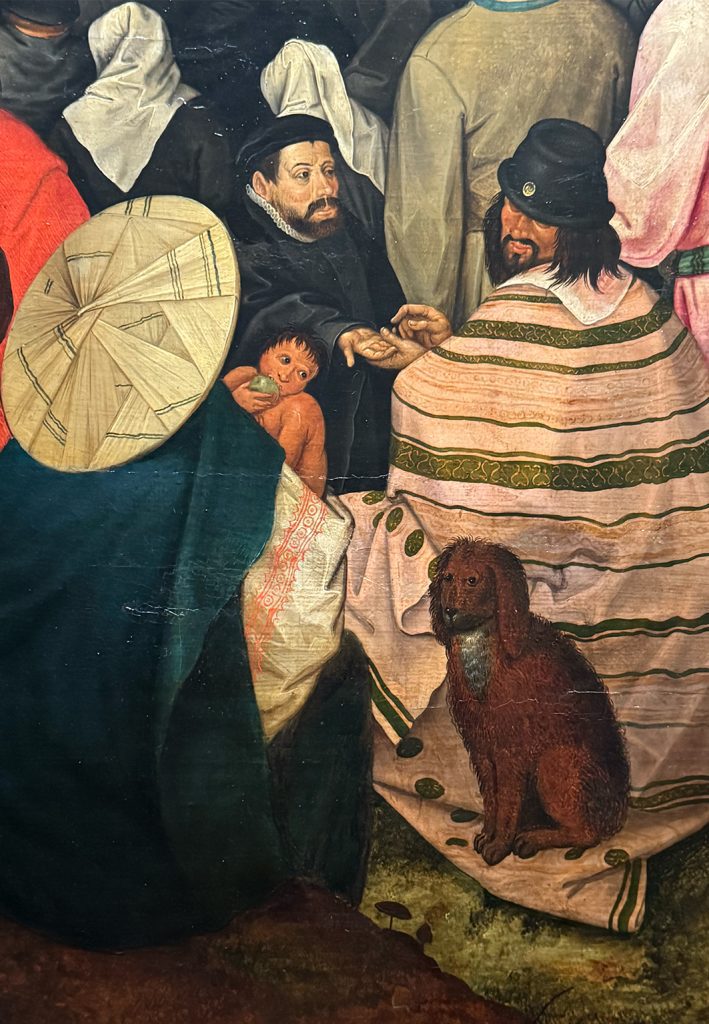
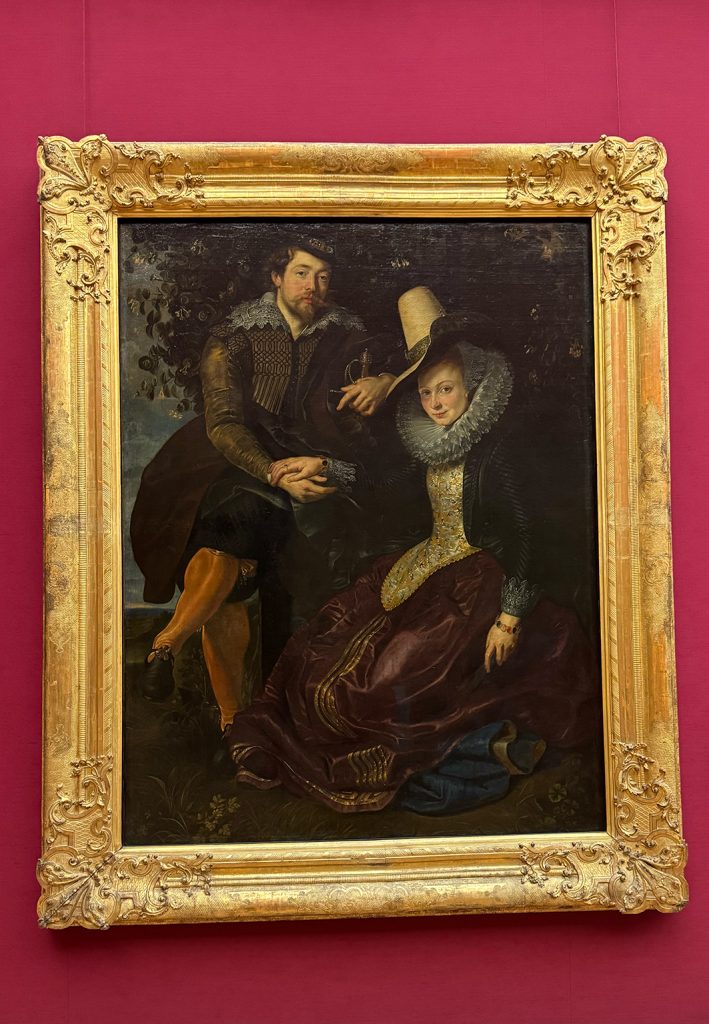
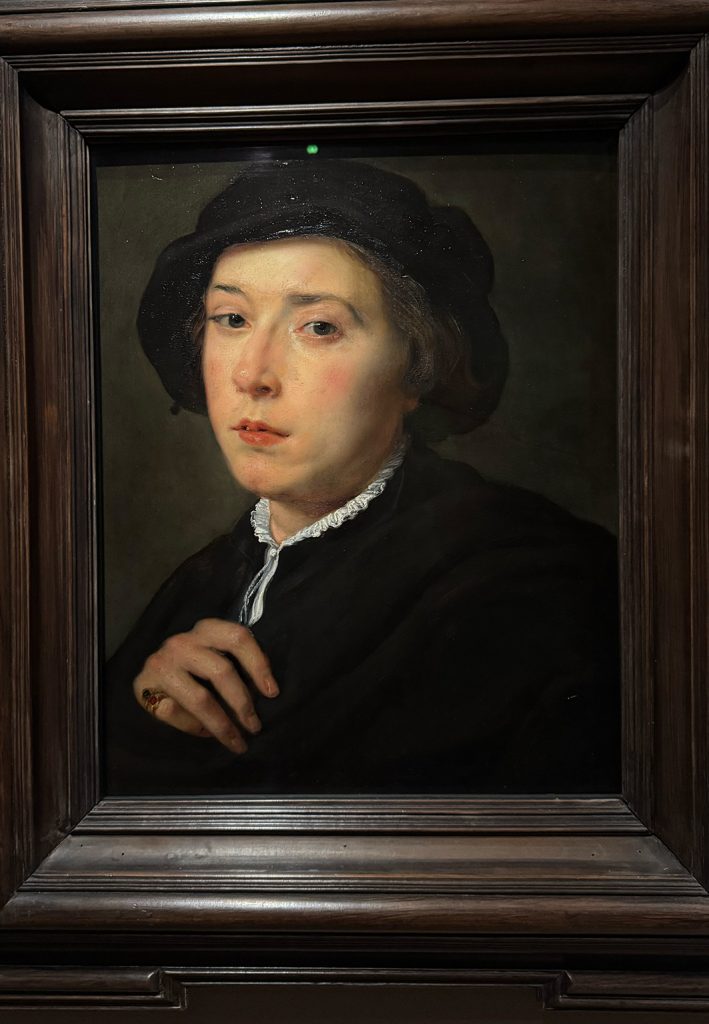
Lucas van Valckenborch, Tower of Babel (1568), Pieter Breughel de J, detail of The sermon of John the Baptist (1615), Peter Paul Rubens, Rubens and Isabella Brant in te Honeysuckle Bower (1609), Pieter Paul Rubens, Portrait of a young man with a black baret (around 1620)
This is the most extensive Rubens collection I have ever seen. His immense oeuvre fills several grand spaces with soaring ceilings. In one of them, a single recliner invites visitors to pause, to lie down with a pair of special glasses and take in the monumental canvases above, an almost meditative way of seeing.
The way some artists handle texture makes fabrics and jewellery appear almost three-dimensional, so real they seem to lift from the surface. In Musical Entertainment (1774) by Louis-Rolland Trinquesse, the sheen of silk is so photogenic it looks like a real snapshot. Painting is craftsmanship at its purest. No digital tricks, just the artist’s eye, a brush and a steady hand. Some manage to capture emotion or expression in a single stroke.
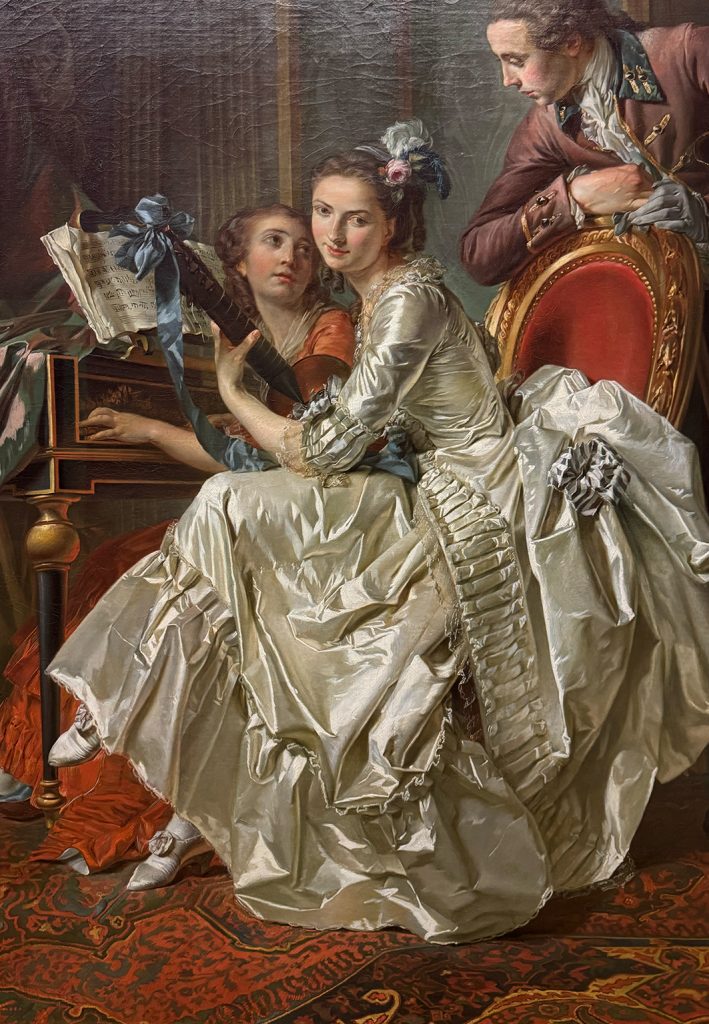
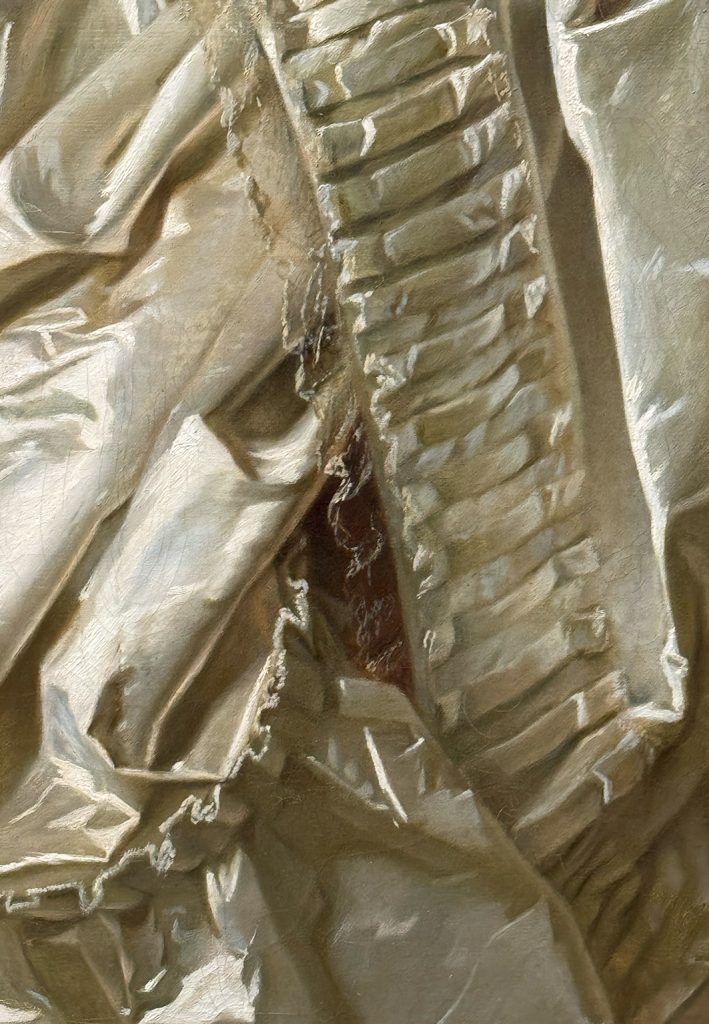
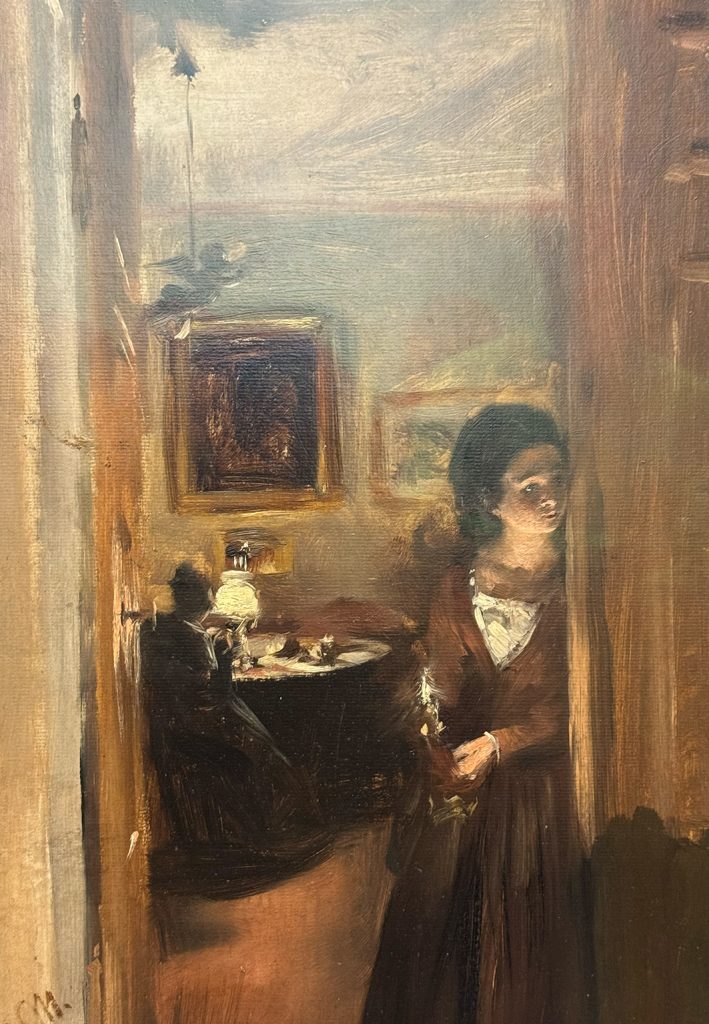
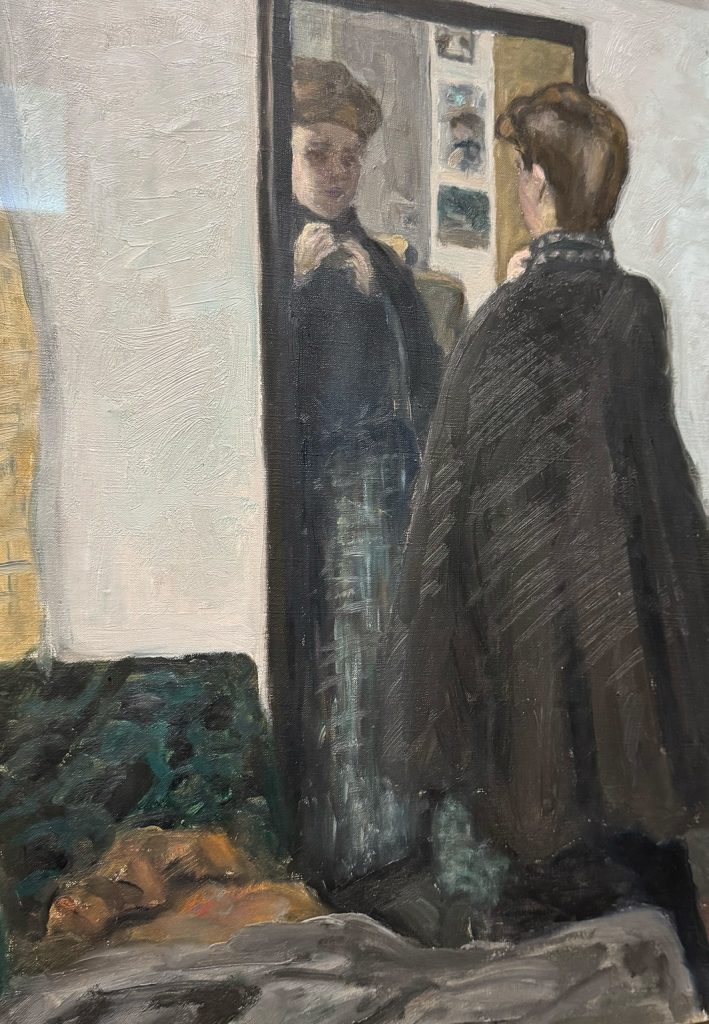
Louis-Rolland Trinquesse, Musical Entertainment (1774), and detail, Adolph von Menzel Living room with the artist’s sister (1847), Pierre Bonnard Lady at the mirror (1905)
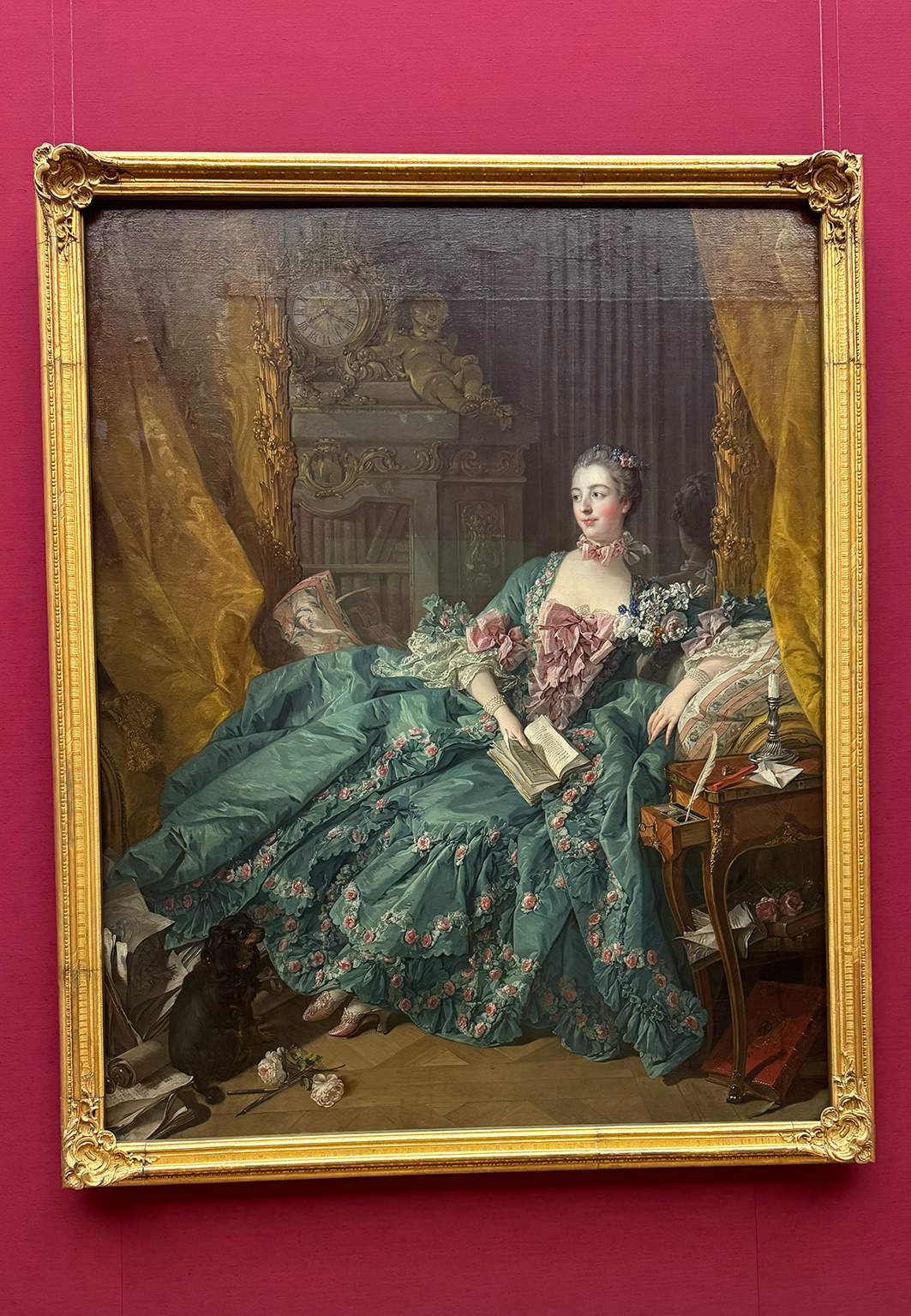
My favourite work? There are too many to mention, though I love Madame de Pompadour by François Boucher. The French painter shows the official mistress of Louis XV surrounded by richness and abundance, with books, letters and flowers. Dressed impeccably, she appears composed yet knowing, a woman of intellect and taste, staged exactly as she wished to be seen. The pastel palette and delicate textures make this portrait feel alive and powerful.
Many of the works I discovered through Waldemar Januszczak’s documentaries are here, along with new discoveries that spark ideas for fashion shoots and perspective building. What I have seen is only a glimpse of the museum’s treasures, yet enough to make me want to return. You need time and patience, and plenty of it, to take it all in. Visiting on a rainy afternoon feels like a gift, shared by many others.
A small secret: on Sundays, the entrance fee is pleasantly affordable.
All images are taken by the author, courtesy of Alte Pinakothek
Discover more www.pinakothek.de