
Migration is never abstract. At FENIX Museum Rotterdam, it becomes spatial, physical and at times unsettling. The museum reflects on migration and belonging not as distant ideas, but as lived experience. The building is part of the former harbour infrastructure connected to the Holland America Line, within the landscape from which countless people once departed for new lives abroad. Opposite stands Hotel New York, the former headquarters of the shipping company, while Katendrecht anchors the area in its maritime past. The site holds layers of departures and arrivals. A landmark on the skyline is Tornado, the spiralling architectural intervention by Ma Yansong of MAD Architects.
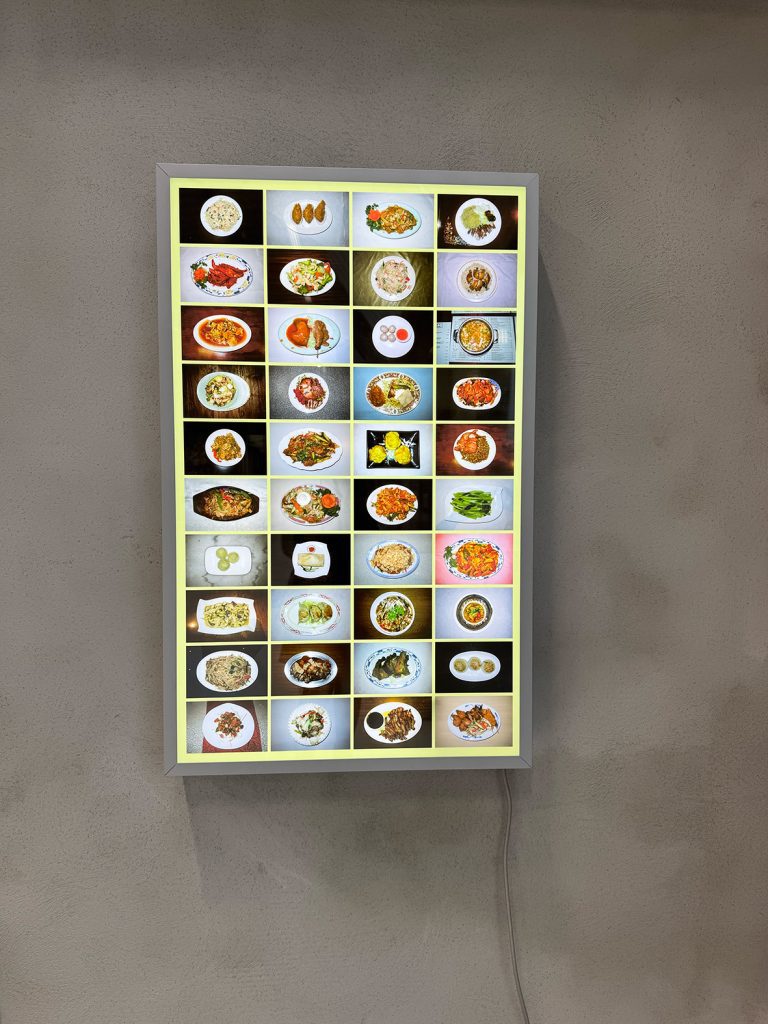
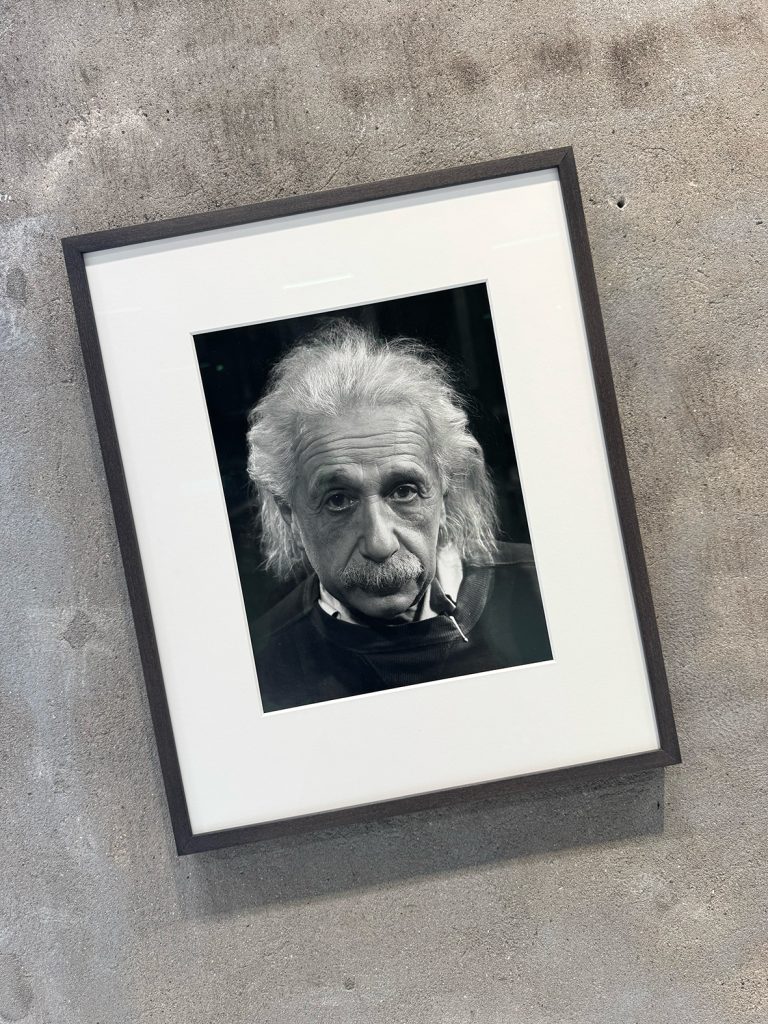
Forty Nr. 39, 2014-2016, Benjamin Li, Portrait of Albert Einstein 1947, Philippe Halsman
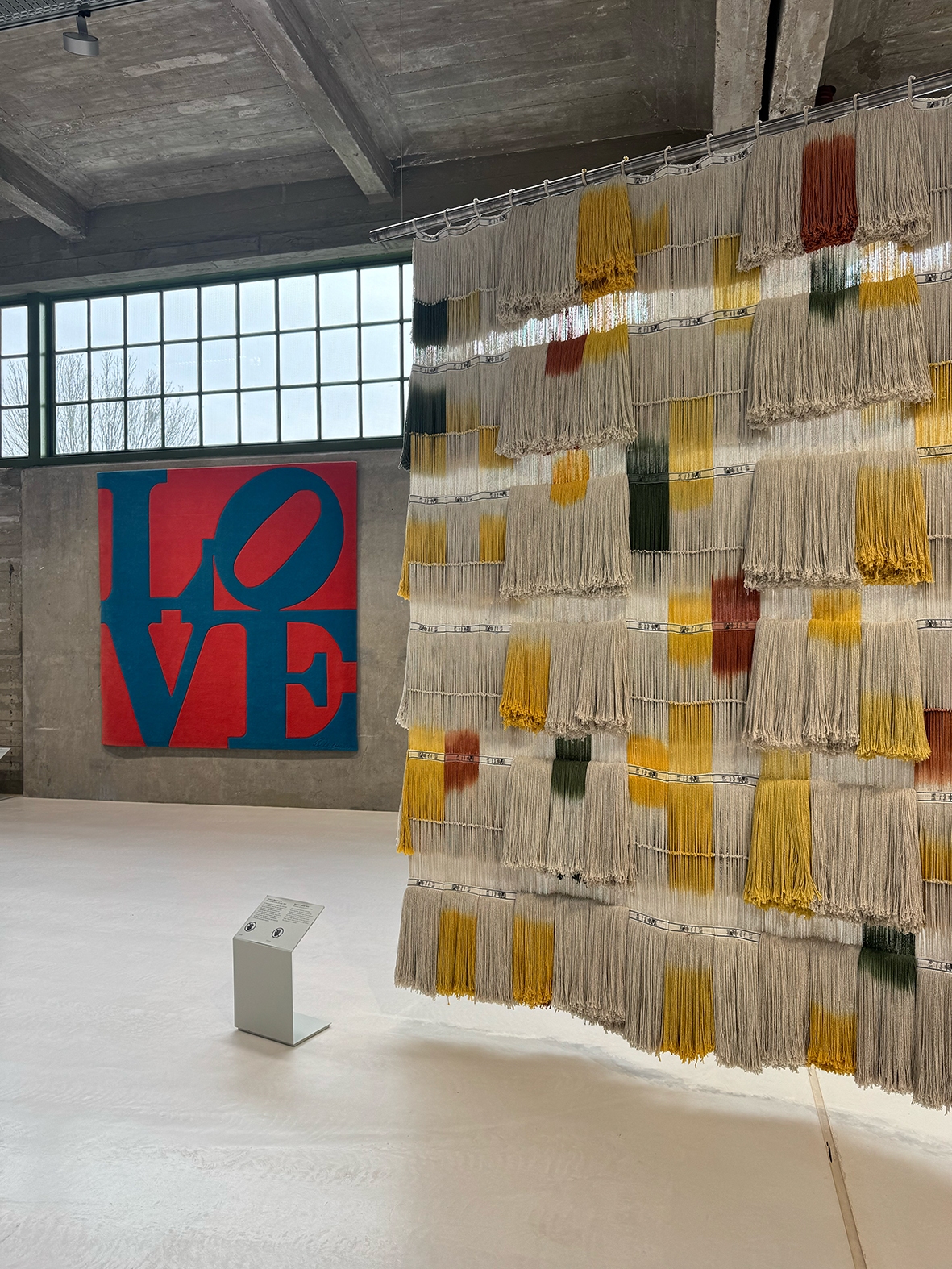
Inside, two expansive halls bring together national and international artists who reflect on identity, movement and borders. One of the most arresting works is Shilpa Gupta’s Border Fence. A metal gate stands in the space, austere and uncompromising. Every half hour it slams shut with brute force, the sound reverberating loudly. Over time, the impact leaves a visible dent in the white plastered wall behind it. The violence of repetition becomes the work itself. A border is not merely a line; it is pressure, sound, resistance. It leaves visible and invisible marks. In the same space, Robert Indiana’s Chosen Love (1995) radiates its familiar typography with renewed urgency in this context. Love here feels aspirational, almost cliché, all you need. Within this new museum that reflects on migration and belonging, the word carries a different weight. Nearby, a 1947 portrait of Albert Einstein by Philippe Halsman anchors the historical dimension. The image is globally recognised. Einstein himself was a migrant, his presence reinforcing the exhibition’s broader narrative.
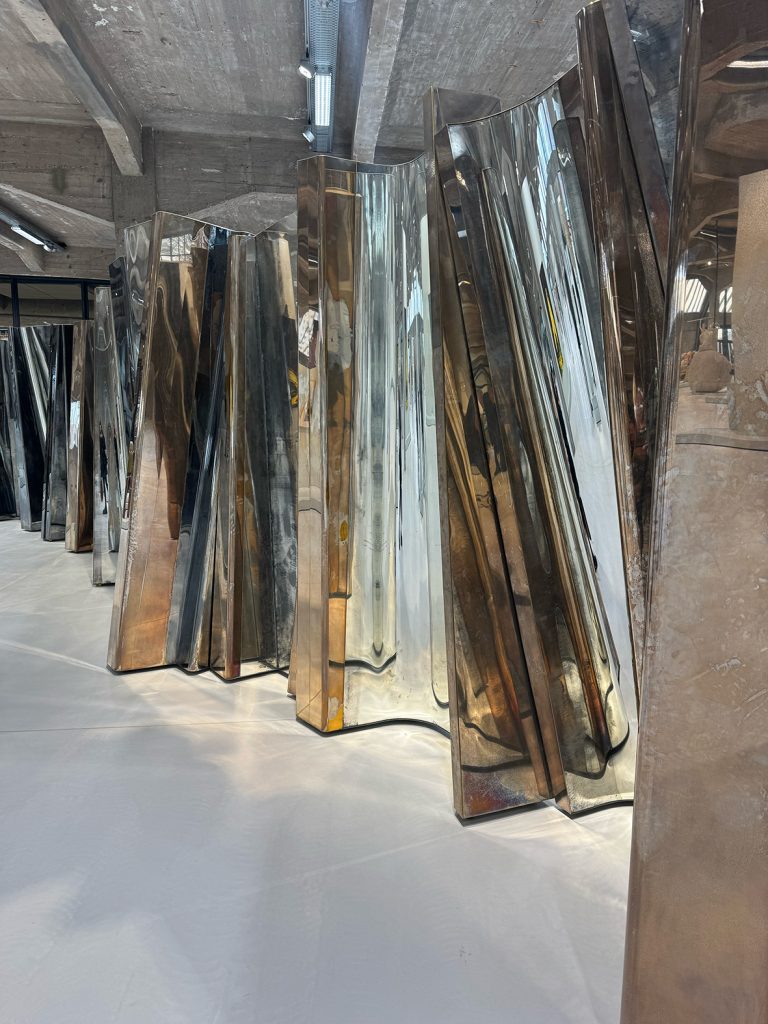
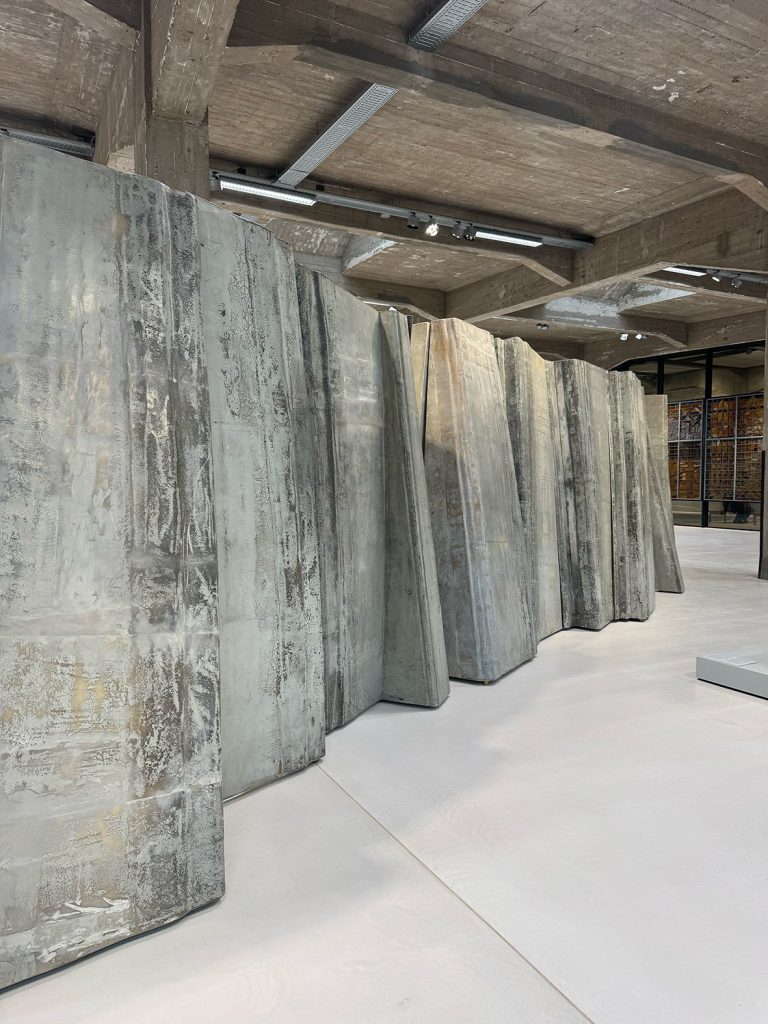
Ode, 2019, Vincenzo de Cotiis
The second hall shifts the atmosphere and narrative. Vincenzo de Cotiis’ Ode installation unfolds as an immersive composition of mirrors and concrete, creating a fractured landscape where reflections multiply and surfaces distort. The viewer becomes part of the structure, caught between illusion and solidity. On one side, the uneven mirrored surfaces naturally invite selfies as much as moments of self-reflection, while the raw concrete asserts material permanence.
Together, the works evoke the emotional architecture of movement: displacement, resilience, safety, longing and the search for belonging. They reflect lived experience, memory and transformation. Visitors are invited to consider what it means to arrive or leave, and when a place begins to feel like home.
Discover:
www.fenix.nl
Images photographed by the author. Courtesy of FENIX Museum and the respective artists.