
/
Dior – Reframing the House
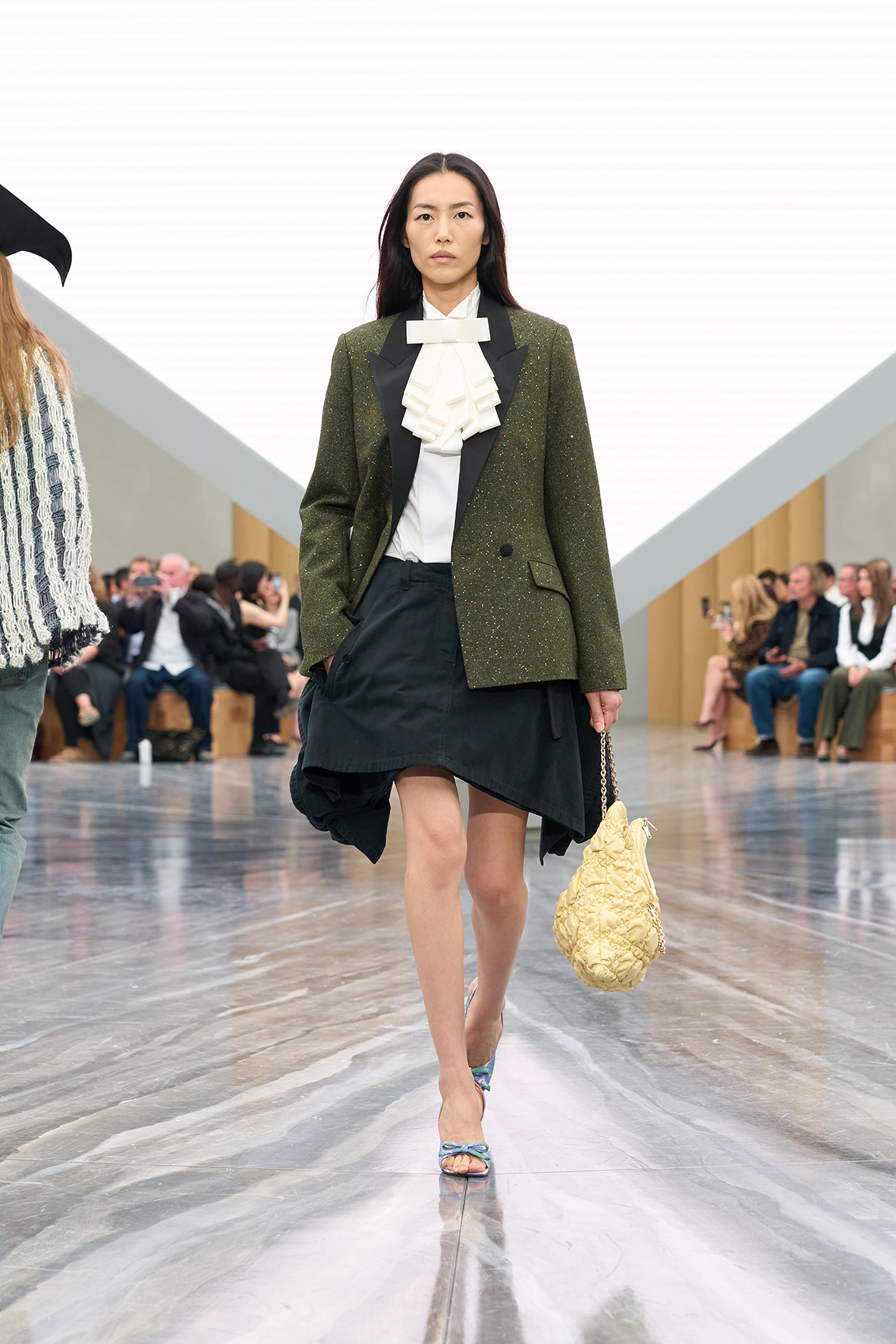
Following his menswear introduction in July, Jonathan Anderson now presents his first womenswear collection for Christian Dior in the Tuileries, opposite the Louvre.
At the centre of the set stands an inverted glass pyramid, an unmistakable echo of the Louvre turned on its head. The scenography is developed with Italian film director Luca Guadagnino and architect and production designer Stefano Baisi. The stage feels closer to a museum installation than to a traditional runway. Monumental. Dior is placed in a reflective mode. Positioned along the axis between the Louvre and Place de la Concorde, the space responds directly to its surroundings. The reversed pyramid acknowledges a Parisian landmark while reinterpreting it. It suggests a house examining its own foundation.
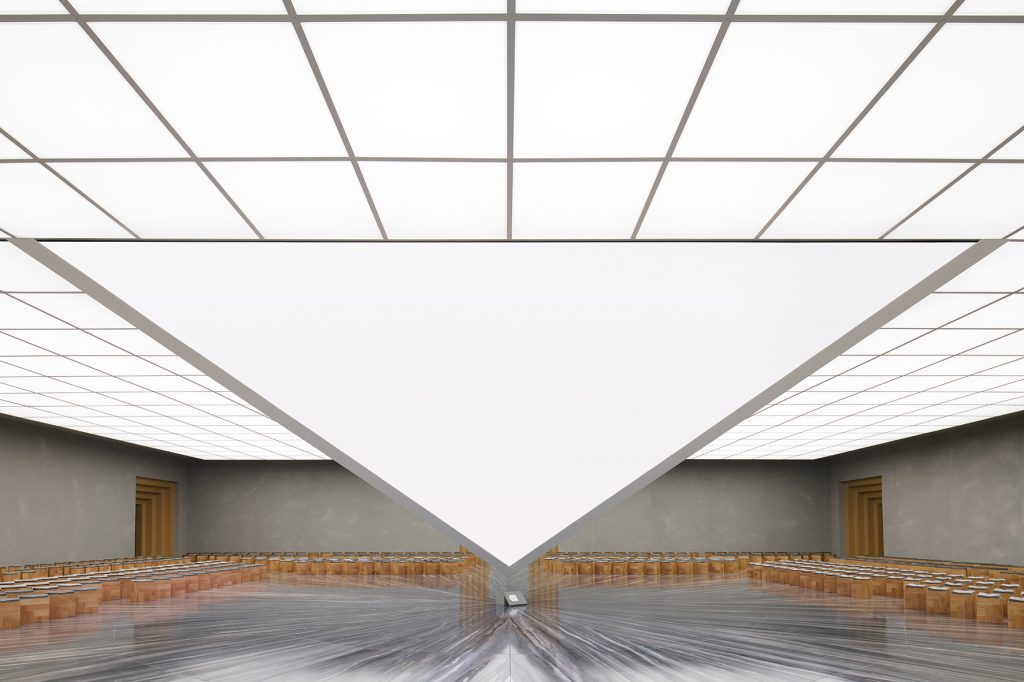
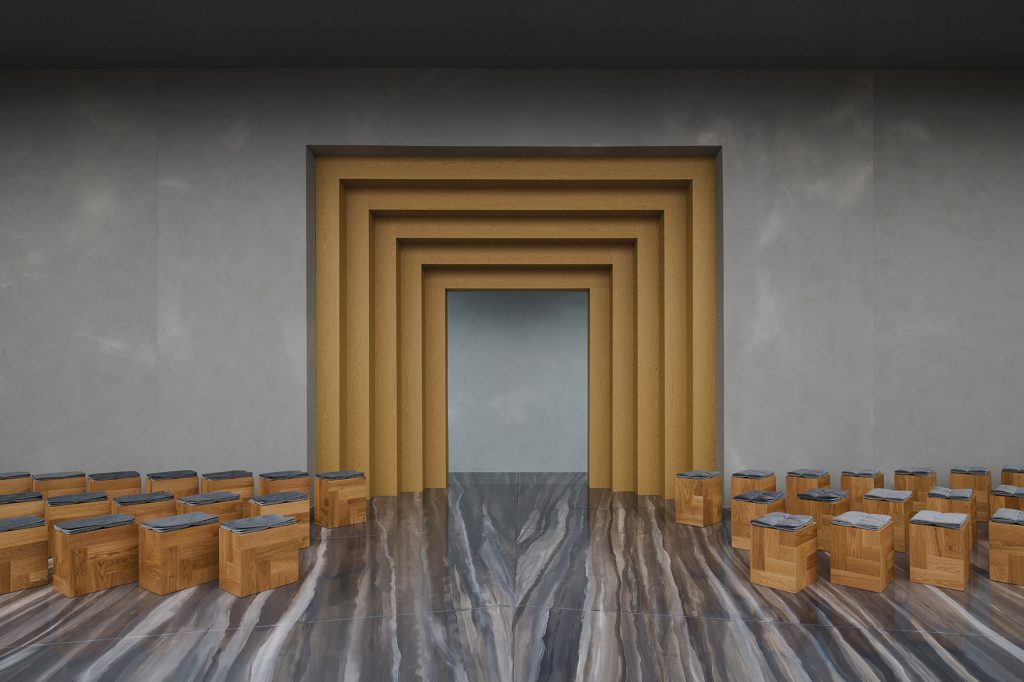
Dior SS26, scenography photography by Adrien Dirand
Before the first look appears, a film by British documentary filmmaker Adam Curtis is projected onto the structure. Dior archive fragments intertwine with vintage horror references, set to Lana Del Rey’s Born to Die. The screen asks: Do you dare enter the house of Dior? The film ends in white.
The exchange between fashion, film and architecture is deliberate. Guadagnino and Baisi approach the set cinematically, treating it as narrative rather than decoration. The pyramid functions as both structure and projection surface, framing Anderson’s entrance into the house.
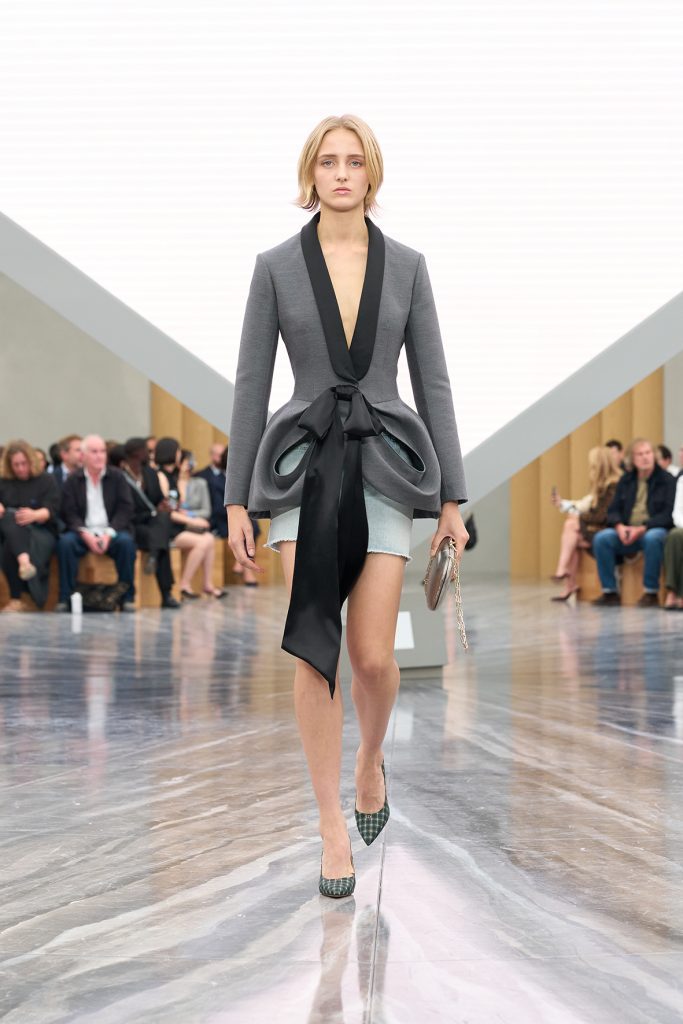
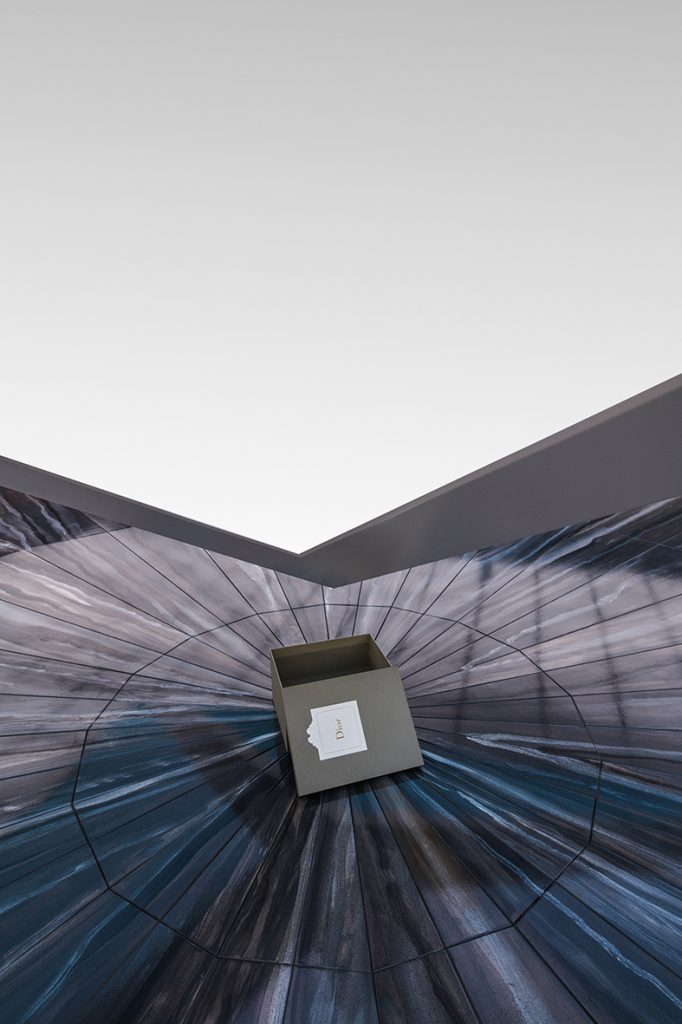
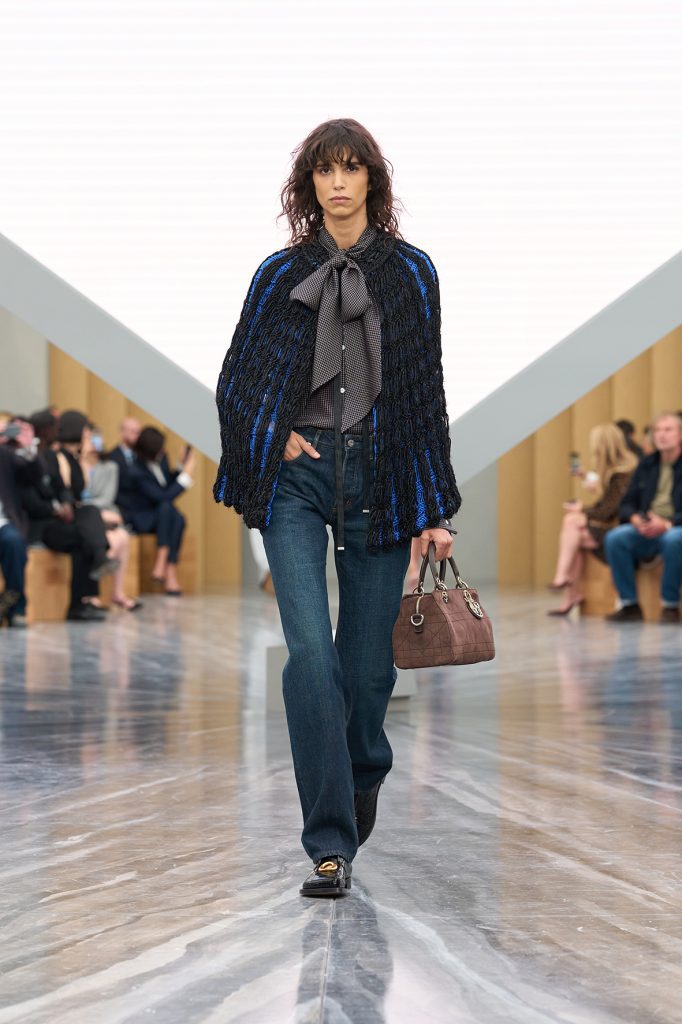
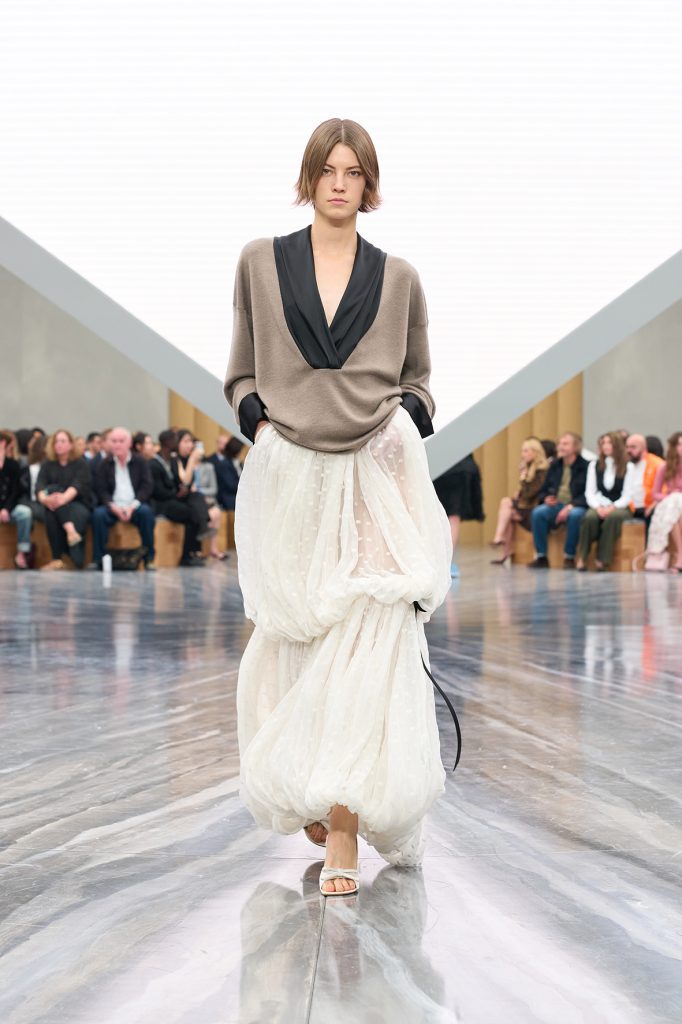
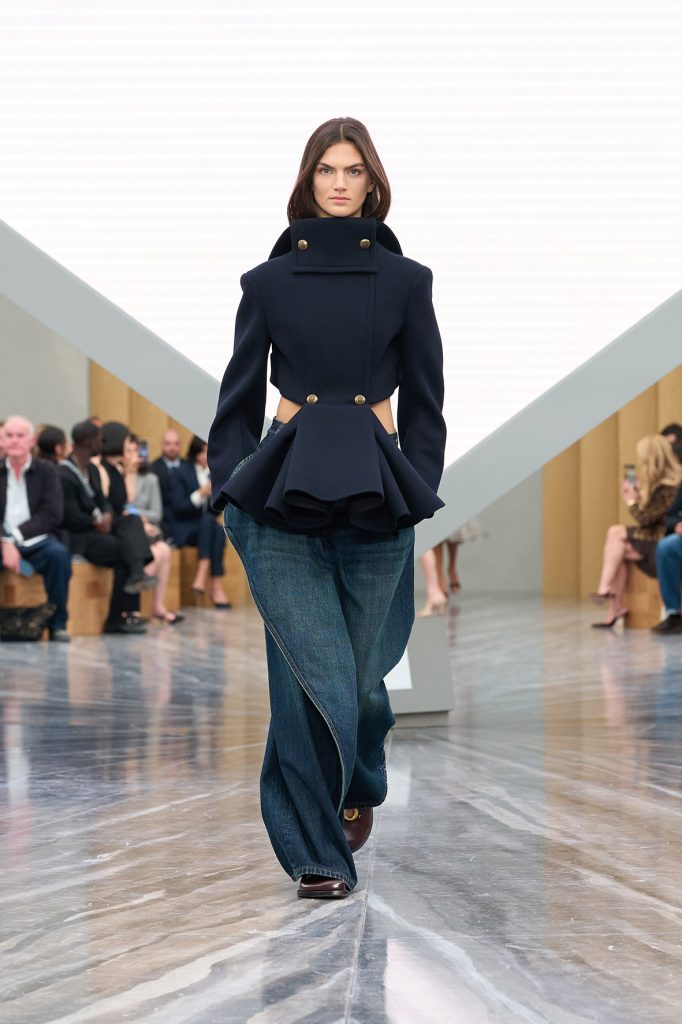
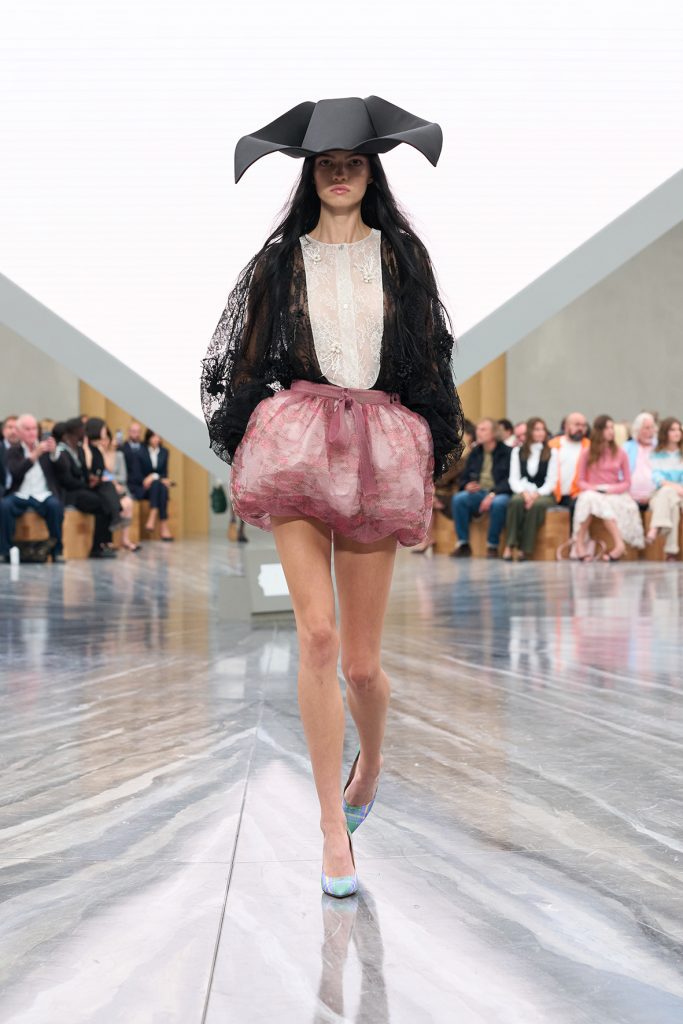
Dior runway photography, courtesy of Dior, scenography photography by Adrien Dirand
The collection acknowledges the lineage of the Maison, including John Galliano’s period at Dior. The imprint of previous designers remains visible, without becoming dominant. The Bar jacket is re-volumised, reduced almost to doll-like scale. The New Look revisited. Iconic accessories return. These are recognisable codes, though their proportions and context shift into this new era. Rather than revisiting Dior’s historic H line or A line directly, Anderson introduces a different, slightly modern architectural logic, with a more playful and open approach. The silhouette feels familiar, with a more modern view. Pouffed skirts and voluminous bubble dresses appear in lace and textured knit. Negligees are held within cage-like constructions. Elements introduced in the menswear show resurface in altered form, cargo shorts transformed into miniskirts.
The coherence between Anderson’s menswear and womenswear is already visible. Romantic high necklines, historical undertones, a certain intellectual tension moves fluidly between both lines. Dior reads as a single narrative. The scenography marks a shift in the house. Even the typography changes. The font is different. Small, deliberate adjustments. That coherence makes him a convincing fit for Dior. The archive is not treated as nostalgia, but as structure. The Maison feels more playful and experimental, and aware of its own history. I would take from both.
Discover more: www.dior.com
Scenography photography by Adrien Dirand, all photography courtesy of Dior.