
/
Horsepower: Fashion in the Year of the Fire Horse
In 2026, the Chinese zodiac welcomes the Year of the Fire Horse. This powerful sign returns once every sixty years and is associated with independence and momentum. In fashion, the horse has long occupied a place in the visual language of luxury.
Long before fashion houses build global empires, riding culture defines hierarchy and craftsmanship. Saddles, harnesses and riding equipment rank among the earliest luxury objects, produced with precision for Europe’s elite. Leather and metal combine utility with status. Riding is transport and status within aristocratic culture.
Goyard, established in 1853, specialises in trunks and travel cases for a well-travelled clientele. In the nineteenth century, long-distance travel takes place by carriage, rail and steamship. Its trunks are designed to withstand stacking, handling and repeated transfer between modes of transport. Durability is essential. In 1892, the house introduces the chevron Goyardine canvas. The hand-painted pattern of layered Y-shapes strengthens the surface while referencing the family name. Lightweight and resilient, it answers the practical demands of travel.
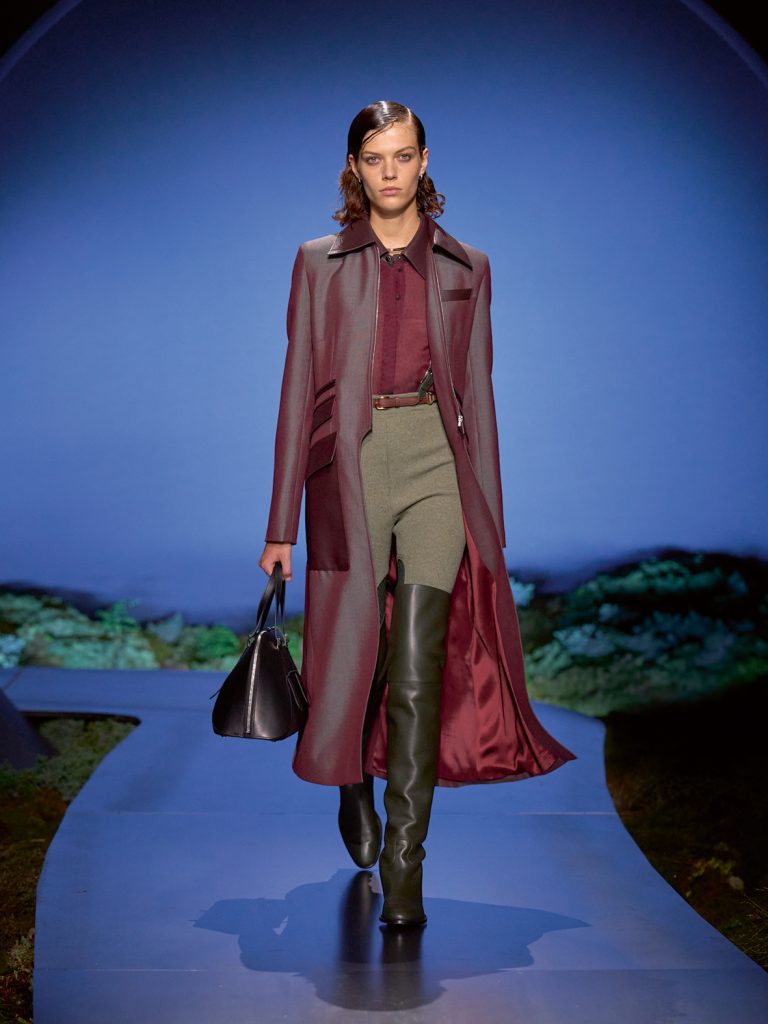
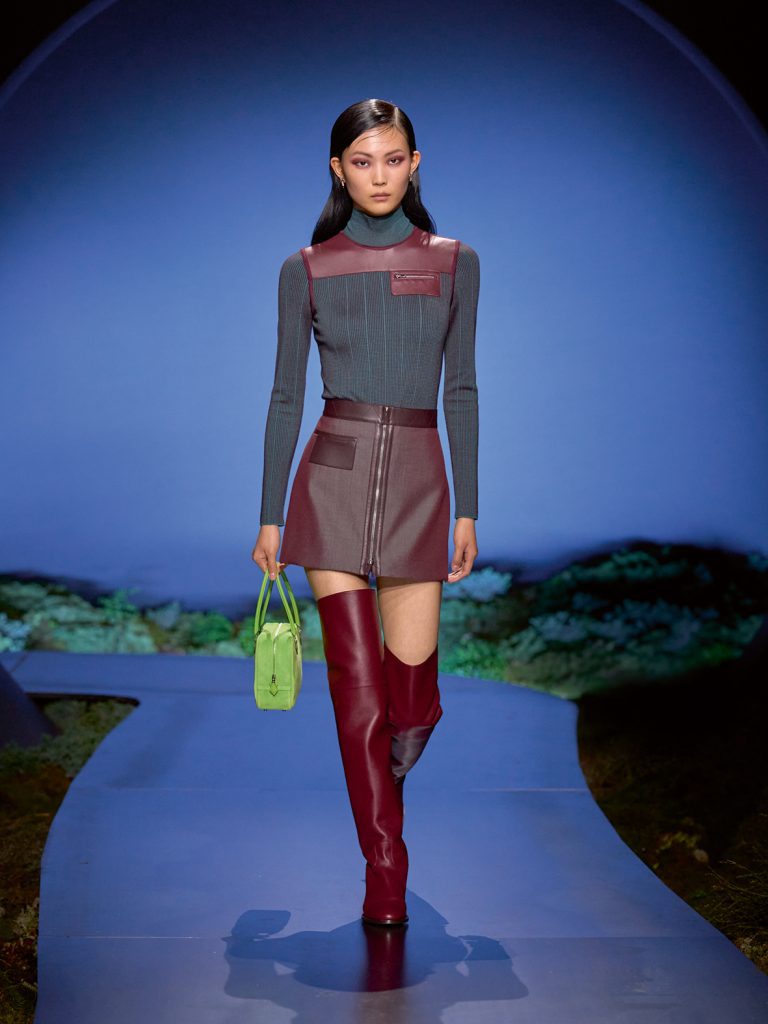
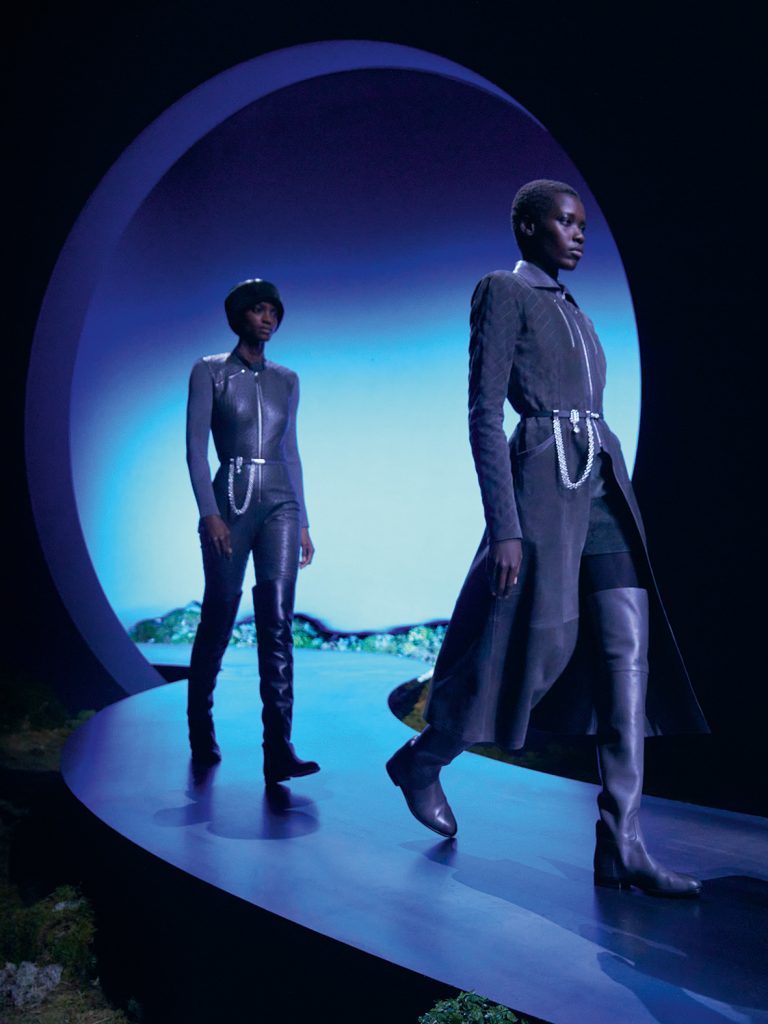
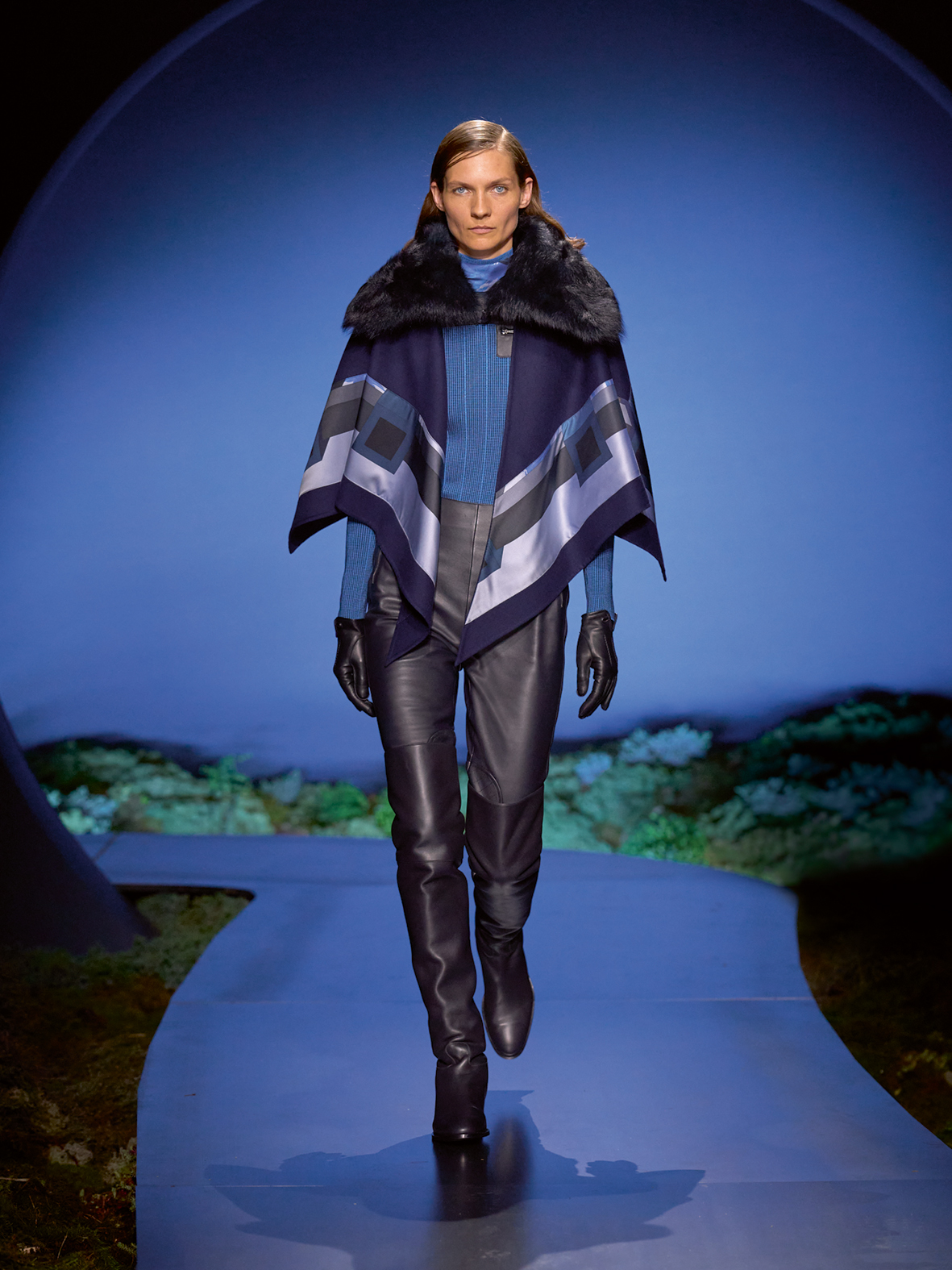
Hermès runway AW26 photography by Filippo Fior, atmosphere photography by Zoë Joubert.
No house is more closely tied to this craft lineage than Hermès. In 1837, Thierry Hermès begins in Paris as a maker of harnesses and saddles for the elite. The carriage emblem still recalls that origin. The construction of its leather goods follows the discipline of bridle and saddle work. Saddle stitching, reinforced seams and measured proportion define the maison long before it becomes synonymous with the Birkin and the Kelly.
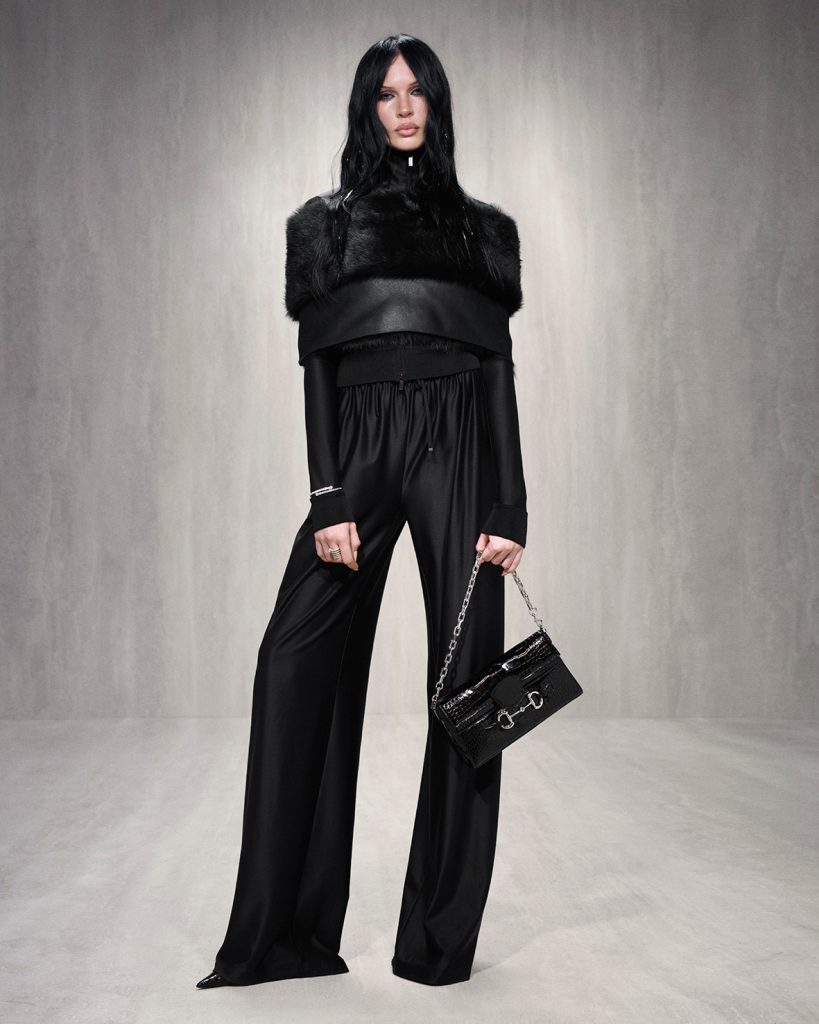
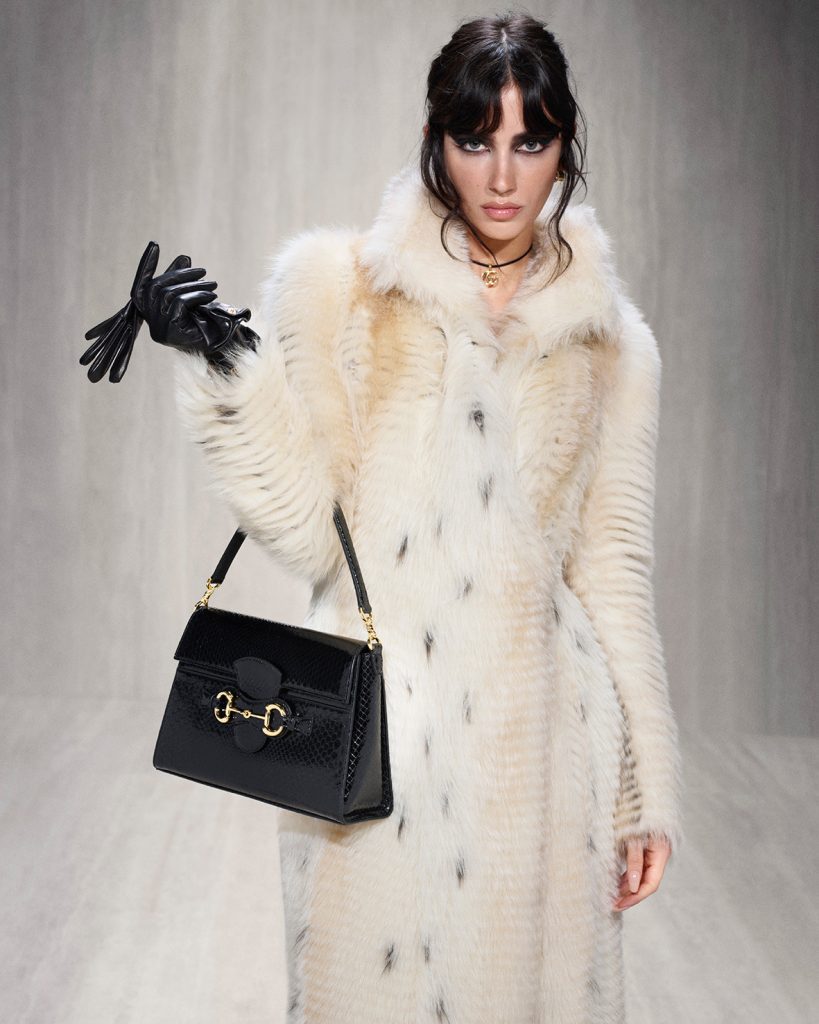
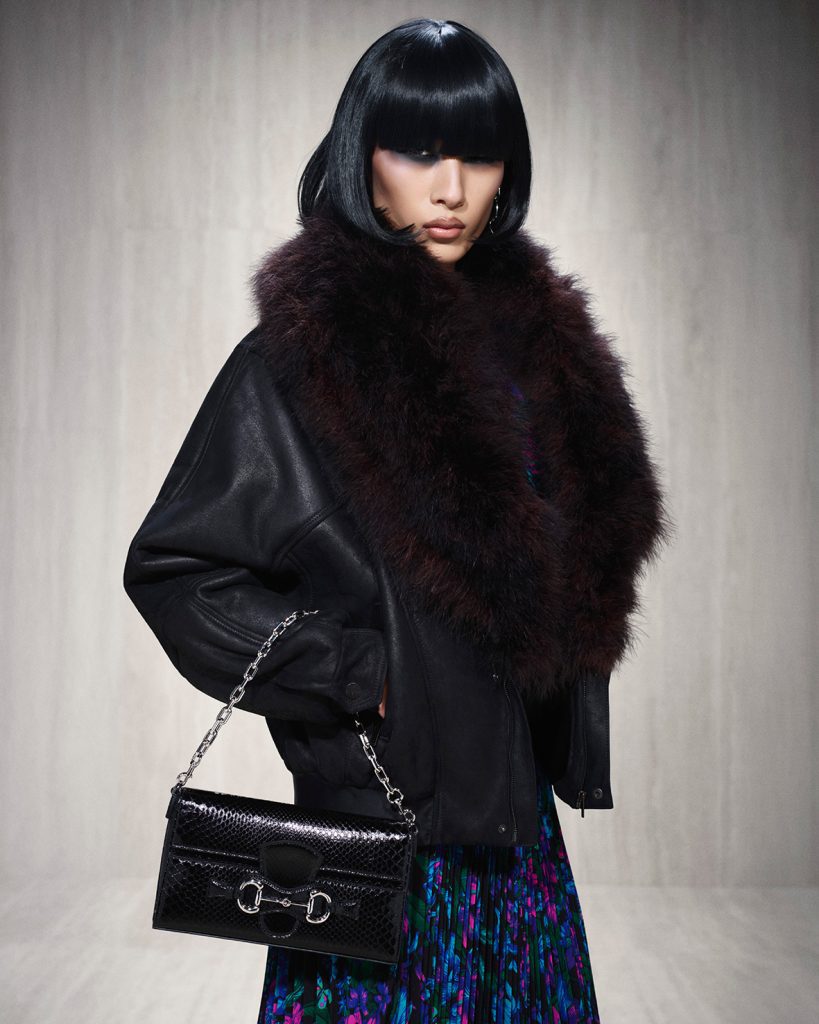
Runway and lookbook images Gucci, courtesy of Gucci
The Italian house Gucci builds its identity on leather goods and riding detail. After working in London at The Savoy Hotel, where Guccio Gucci observes the luggage and refined habits of international guests, he returns to Florence. Drawing on that experience, he opens his leather goods workshop in Florence in 1921. References to aristocratic riding culture gradually enter the house vocabulary, most notably through the horsebit. In 1953, the horsebit loafer gives this detail lasting form. A functional snaffle, drawn directly from bridles, becomes a recognisable signature in polished brass and gold or silver finishes.
In Paris, Longchamp adopts the galloping horse as its emblem, referencing the Hippodrome de Longchamp and Parisian racing culture. Established in 1948 as a leather goods house, it links craftsmanship to speed and motion. In United Kingdom, Burberry introduces the Equestrian Knight in 1901. Armour, banner and rider form a heraldic device linked to heritage and protection.
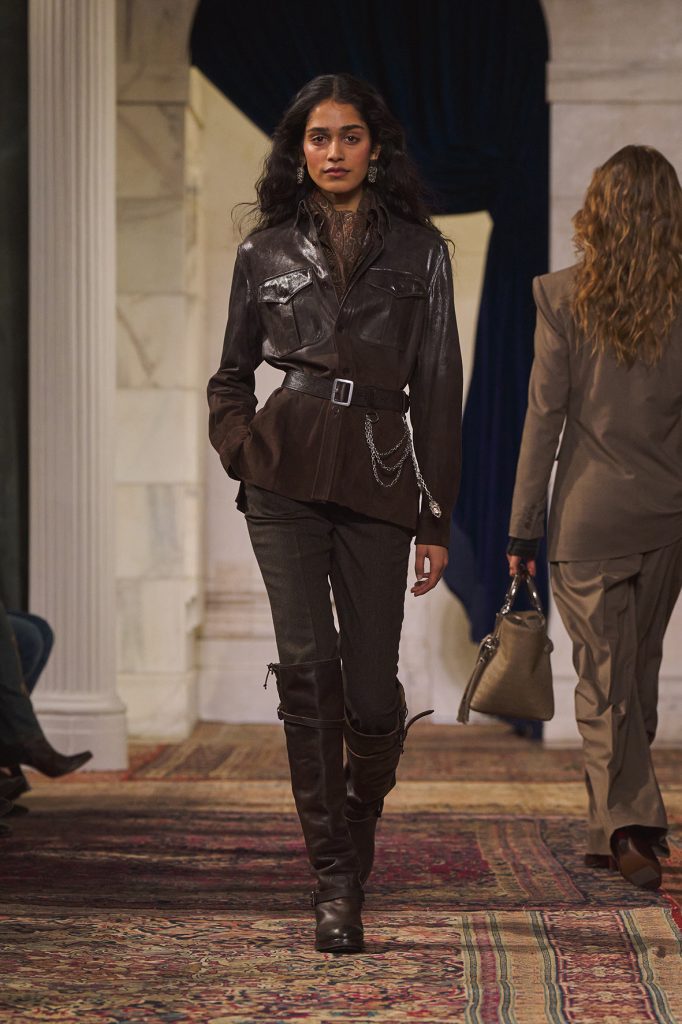
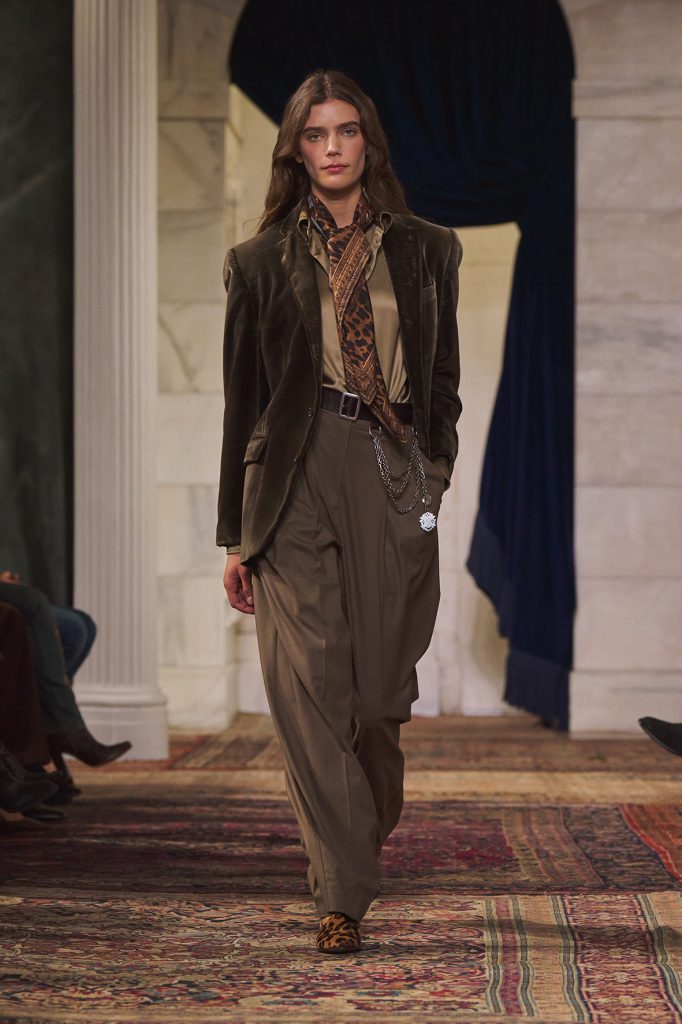
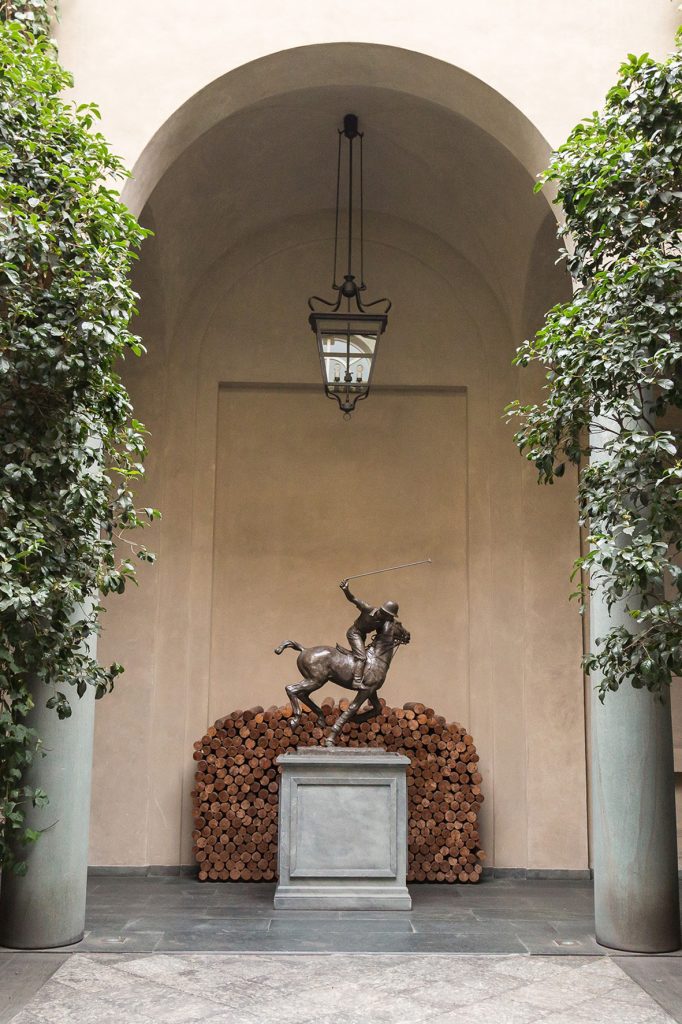
Ralph Lauren RTW AW26, images courtesy of Getty Images and Ralph Lauren
Across the Atlantic, Ralph Lauren builds an identity around the polo player. The rider mid-strike becomes both emblem and aspiration. Country estates, playing fields and ranch landscapes shape an American narrative of cultivated ease. Celine once uses a carriage emblem inspired by the chains surrounding the Arc de Triomphe, an urban detail rooted in nineteenth-century horse-drawn traffic. The revived Triomphe motif retains the interlocking chain without the animal itself, leaving the reference embedded in the archive rather than on the surface.
In the nineteenth century, mobility relies on leather, wood, canvas and horsepower. Travel depends on muscle and material. What begins as necessity later becomes design language. This heritage remains largely European, rooted in aristocratic sport and leather craft in France, Italy and Britain. In the United States, the rider shifts into lifestyle and aspiration. Elsewhere the horse remains a cultural symbol rather than a defining code of a fashion house. The Fire Horse intensifies this image. In fashion, the symbol still suggests momentum. Galloping on.
All runway images of Gucci courtesy of Gucci. Hermès photography by Filippo Fior and Zoë Joubert. Ralph Lauren images courtesy of Getty Images and Ralph Lauren.