
/
Baccarat: French Crystal Couture
For some, Baccarat is a game of chance. For others, it is one of France’s oldest crystal houses. Today, the name is just as likely to evoke Baccarat Rouge 540, one of the world’s most recognisable fragrances.
Long before the perfume became a modern icon, Baccarat had spent more than 260 years mastering another art: crystal. Founded in 1764, the French maison takes its name from a small town in eastern France, a name that has become a global symbol of French craftsmanship and joie de vivre.
The house first captivated an international audience at the 1855 Exposition Universelle in Paris. Since then, Baccarat’s crystal has travelled the world, from royal commissions for Napoleon III and the Japanese Imperial Court to collaborations with some of the most influential creatives of the past century, including Salvador Dalí, Philippe Starck, Jaime Hayon and Virgil Abloh. Each brought a new perspective, while Baccarat’s artisans continued to push the possibilities of crystal.
The number 540 connects Baccarat’s crystal heritage with the world of fragrance. It refers to the temperature at which Baccarat’s signature red crystal is created by fusing clear crystal with 24-carat gold. Originally composed by Maison Francis Kurkdjian to celebrate Baccarat’s 250th anniversary, Baccarat Rouge 540 translates that same alchemy into fragrance.
Baccarat’s return to Milan Design Week feels less like a new chapter. Design, craftsmanship and artistic collaboration have always been at the heart of the maison. The latest presentation in Brera simply adds another layer to a story that began more than two and a half centuries ago.
Like haute couture, every Baccarat creation begins with craftsmanship, not production.
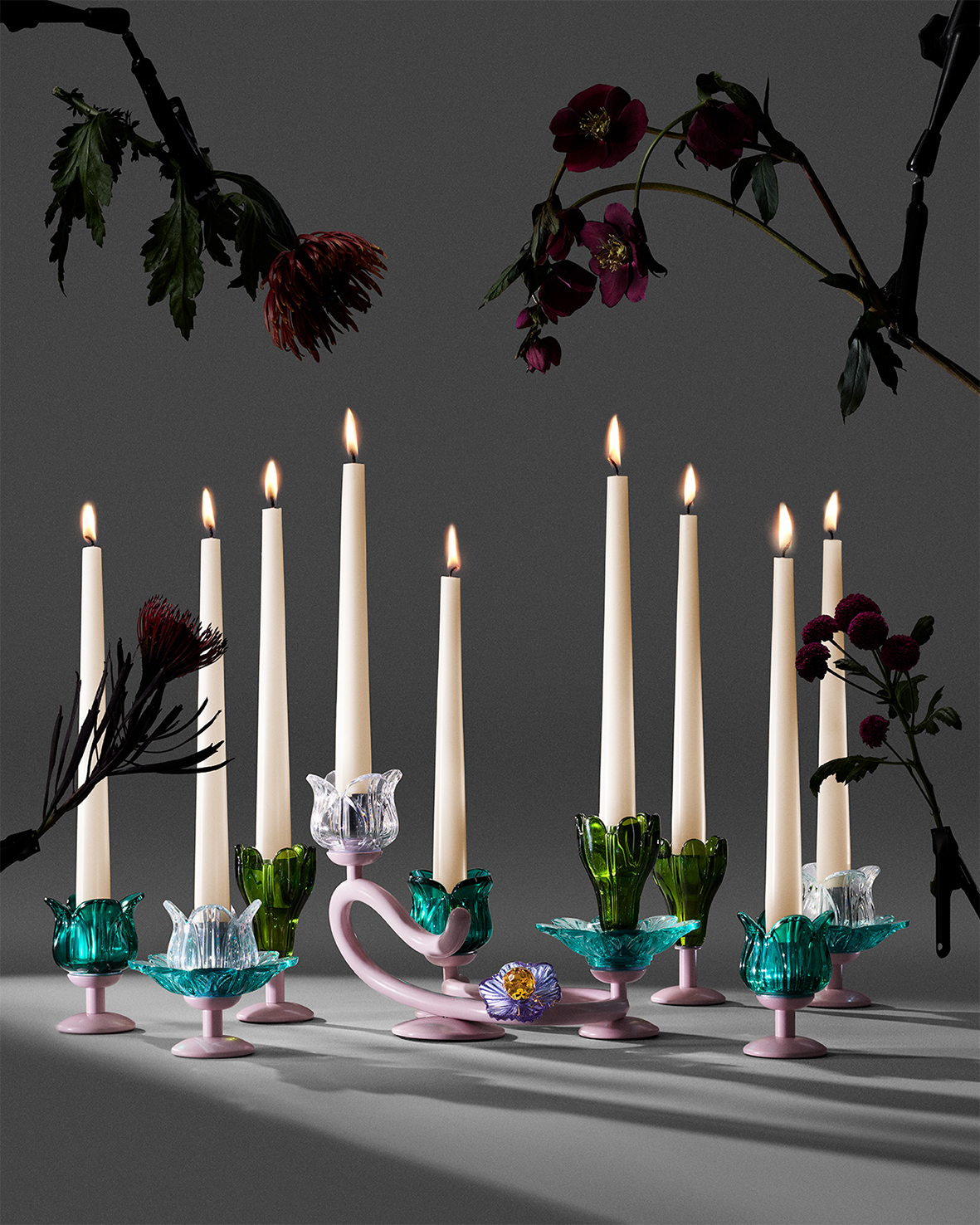
Images from the Baccarat presentation during Salone del Mobile. Photography by Nicolas Receveur. Courtesy of Baccarat.